
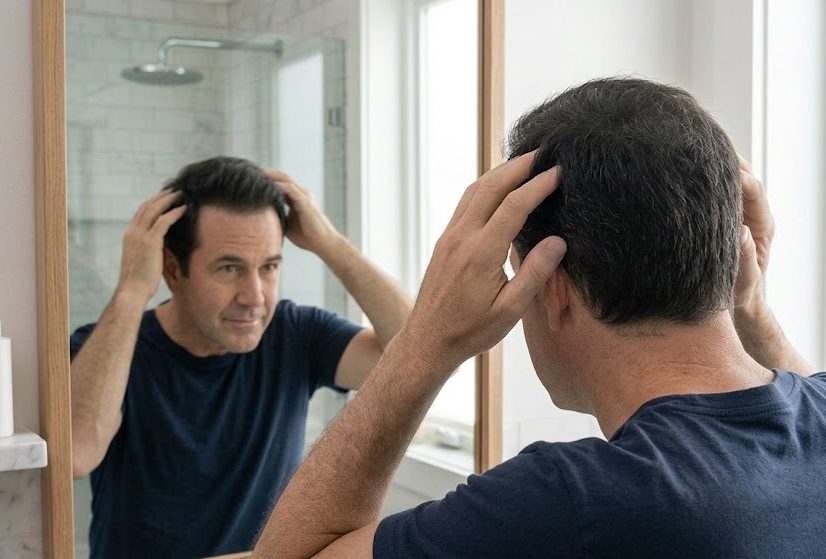
I recommend protecting the scalp carefully during the first four days by avoiding water, shampoo, sweating, heat, sun, and shaving over the treated area. From day five, gentle washing is appropriate. Avoid swimming for 28 days, use SPF 30 to 50 outdoors, and wait 28 days before judging the settled pigment or proceeding.
You have just had your first male density SMP session, and now you are watching your scalp in the mirror wondering whether what you are seeing is normal. The redness, the apparent fading, the patchy look around day four: all of it raises questions. This guide walks you through exactly what to expect, day by day, across the full 28-day healing window. By the end, you will know what settled pigment looks like and whether you are ready for your next session.
What scalp micropigmentation density actually does to your skin
Scalp micropigmentation for male density works by depositing medical-grade pigment into the upper dermal layer of your scalp, at a depth of roughly 1.5 to 2 millimetres, using a needle cycling at 100 to 150 cycles per second. The goal is not to replace hair; it is to reduce the visible contrast between your scalp and your existing hair, creating the optical impression of fuller, denser coverage. It does not stimulate regrowth or affect your follicles in any way.
Each session deposits tens of thousands of individual pigment impressions in a stippling pattern. In early sessions, impression density sits at around 40 impressions per square centimetre. By your final session, that typically builds to 80 to 100 impressions per square centimetre. This is why multiple sessions are necessary: the skin needs time to heal between passes, and density is built progressively rather than all at once.
What you see immediately after your session is not what you will live with. The pigment sits high in the skin while healing, the scalp is slightly inflamed, and the impressions appear darker and sharper than they will once settled. That is normal. Expect it.
Days one to four: the critical protection window
The first four days are the most consequential for your result. During this window, your skin is actively healing over each pigment impression, and any disruption to that process can pull pigment out prematurely or cause uneven retention.
No water on your scalp. No shampoo. No sweating from exercise or heat. No shaving over the treated area. The scalp will feel tight and slightly tender, and you will likely see some redness. That redness typically subsides within two to three days. If it has not significantly reduced by day four, let your practitioner know.
The impressions will look darker than you expected during this phase. That is the pigment sitting in the upper layers of the skin before epidermal turnover begins. Do not judge the result yet. The skin’s natural cell renewal cycle, which takes roughly 27 days, will clear the surface pigment and reveal the true settled tone beneath. What looks very bold on day two often looks precisely calibrated on day 14.
Days five to ten: gentle reintroduction and sun discipline
From day five, you can begin gentle washing with a mild, fragrance-free shampoo. Use light fingertip pressure; no scrubbing, no rough towel drying. Pat the scalp dry.
Sun exposure is your main concern during this phase. UV radiation is one of the primary drivers of premature pigment fading, and freshly deposited pigment is especially vulnerable. Keep your scalp out of direct sun during days five to ten. Wear a loose hat if you are outdoors for extended periods, but avoid tight-fitting caps that create friction over the treated area.
Some clients notice what feels like significant fading around days seven to nine. This is normal and expected. It is the epidermal layer clearing over the impressions, and it can create the impression that the pigment has almost disappeared. It has not. The dermal layer retains the pigment, and the result will re-emerge as healing completes. This is one of the most common moments of unnecessary concern among clients, and it almost universally resolves itself by days 14 to 16.
Days ten to twenty-eight: reading your settled result correctly
From day ten onwards, you can return to normal grooming. The key addition to your routine is SPF. Apply a broad-spectrum SPF 30 to 50 sunscreen to your scalp whenever you are outdoors. This is not optional maintenance; it directly determines how long your result lasts before a follow-up is needed. Sun exposure, along with oily skin and fast cellular metabolism, is one of the leading accelerators of pigment fading over time.
Avoid swimming pools for the full 28 days after your final session. Chlorinated water is particularly aggressive on freshly deposited pigment and can cause uneven fading across the treated area.
By days 21 to 28, your scalp should look and feel fully healed. The pigment will appear softer and slightly lighter than it did immediately after the session; that is the correct outcome. Impressions should look consistent in tone and spacing, without large blank patches or noticeably darker clusters. If you are seeing significant uneven areas at the 28-day mark, that is the right moment to flag it with your practitioner before booking your next session. Uneven retention at this stage is worth discussing rather than building over.
Most male density clients require two to four sessions spaced several weeks apart, with the full result only assessable once the final session has healed. Follow-up appointments are typically needed every three to five years, depending on your skin type, sun habits, and how consistently you use SPF. Clients with dry skin and disciplined sun protection routinely sit closer to the five-year end of that range.
Contraindications to be aware of going forward include active scalp acne, psoriasis flare-ups, and eczema. If any of these develop between sessions, hold off and allow the skin to settle before your next appointment.
Frequently Asked Questions
Is it normal for my scalp to look patchy around day seven to nine after a male density SMP session?
Yes, this is one of the most common points of concern and it is almost always normal. Around days seven to nine, the epidermal layer clears over the pigment impressions, which can make the result look faded or patchy. The dermal pigment remains intact and the result re-emerges clearly by days 14 to 16 as healing progresses.
How long does the SMP healing timeline take for male density work?
Full healing after a male density SMP session takes approximately 28 to 30 days. The most sensitive period is the first four days, during which you must avoid water, sweat, and sun. Surface redness typically resolves within two to three days, but true pigment settlement and accurate assessment of the result requires the full 28-day window.
When can I go back to the gym after a scalp micropigmentation density session?
Avoid any exercise that causes sweating for the first four days after your SMP session. Sweat disrupts the early healing process and can pull pigment out unevenly. From day five, light activity is generally fine. Heavy training that produces significant perspiration should wait until days seven to ten, when the surface layer has more reliably closed over.
How do I know if the pigment has settled correctly before booking my next session?
Wait the full 28 days before assessing. Settled pigment should appear consistent in tone and spacing across the treated area, softer and slightly lighter than immediately after the session. Large blank patches, heavily uneven clusters, or significant color inconsistency at the 28-day mark are worth discussing with your practitioner before proceeding to the next session.
Does sunscreen really affect how long male density SMP results last?
Yes, meaningfully so. UV exposure is one of the primary drivers of pigment fading over time. Applying SPF 30 to 50 sunscreen to your scalp whenever you are outdoors is one of the most effective things you can do to extend your result. Clients who are consistent with sun protection typically see their results hold closer to the five-year end of the three-to-five-year maintenance range.
What should I do if my scalp is still red after the first four days?
I recommend letting me know if the redness has not significantly reduced by day four. Some redness, tightness, and slight tenderness are expected, with redness typically subsiding within two to three days. During the first four days, continue avoiding water, shampoo, sweating, heat, sun, and shaving over the treated area.
