
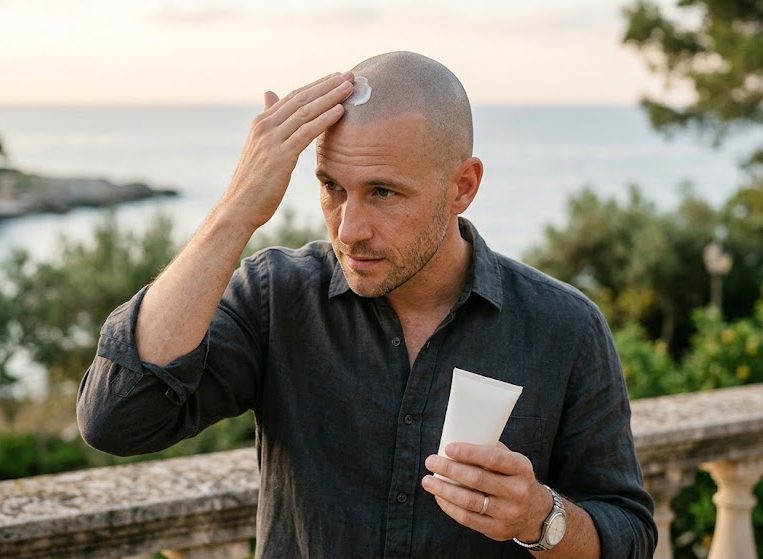
I advise keeping water, sweat, heat, friction, and direct sun away from the scalp during the first four days. From day five, gentle washing is acceptable, light nonsweating activity around day seven, and normal grooming and exercise from around day ten. Avoid swimming pools until day 28, with full healing complete at 30 days.
You have just finished your session and the impressions look sharp, dark, and dense. Then, over the next few days, they seem to lighten. Is that normal? Is something wrong? This guide walks you through exactly what happens to your scalp during the 30-day healing window, what you must avoid and when, and the specific signs that mean you should contact your practitioner.
Days 1 to 4: the critical no-follow window
The first four days are the most important. Your scalp has just had pigment deposited at a depth of 1.5 to 2 millimetres into the dermis. The skin is reactive, and anything that introduces moisture, heat, or friction risks pulling pigment out before it has bonded properly.
Keep water completely off your scalp. That means no shampooing, no rain, no gym sessions, no saunas, and no swimming pools. Even a light sweat during a brisk walk can be enough to disrupt the earliest stage of healing. If you need to go outside, wear a loose hat rather than letting direct sun hit the treated area.
Some redness and mild swelling are normal on days one and two. Both typically settle within 48 to 72 hours. The impressions will appear darker than the finished result at this stage, which is entirely expected. Resist the urge to follow, pick, or rub the scalp. The skin is still sealing around each pigment deposit, and interference at this point will directly affect retention.
Days 5 to 10: gentle washing begins, sun still off-limits
From day five, you can reintroduce water. Gentle washing with a mild, fragrance-free shampoo is fine, but keep the routine light. Avoid scrubbing, harsh products, and long showers in which steam builds up around your head.
This is the window where most people notice the pigment appearing to lighten significantly. That is not fading. It is the natural process of the epidermal layer, which sits above the dermis where your pigment lives, cycling through and partially obscuring the impressions as it heals. The dermal pigment is still there. What you are seeing is a temporary veil of healing skin.
Sun exposure remains off-limits during this period. Ultraviolet light at this stage is one of the fastest ways to break down pigment before it has fully settled. If you are heading outdoors, cover the scalp. SPF products are not yet recommended on skin that is still mid-heal; a hat is the right tool here.
Light, non-sweating activity is acceptable from around day seven. Avoid anything that raises your core temperature enough to produce a genuine sweat. If you are unsure whether an activity qualifies, err on the side of caution.
Days 10 to 30: SPF becomes your most important habit
From day ten, you can resume a fairly normal grooming routine. If you maintain a shaved or closely cropped head, careful shaving with a clean razor is generally safe around the two-week mark, though it is always worth checking with your practitioner first given individual variation in healing.
This is also when SPF becomes non-negotiable. Once the scalp has healed, sun exposure is the single biggest driver of long-term pigment fading. Apply SPF 30 to 50 to the scalp every time you are outdoors without a hat. It is not optional maintenance. The reason SMP results last anywhere from three to eight years for most people, rather than fading significantly sooner, comes down largely to how consistently this one step is followed.
Swimming pools remain off-limits until day 28. Chlorinated water is particularly aggressive on healing pigment, and the risk of infection from pool environments is real while the skin is still consolidating.
Full healing is complete at 30 days. Your next session, if you are partway through a multi-session programme, is typically scheduled with this in mind. Most people require two to four sessions to build from the initial 40 impressions per square centimetre of the first appointment to the 80 to 100 impressions per square centimetre that create the finished density. Do not judge the result until you have completed all sessions and waited out the full healing window.
Warning signs that need a clinic call
Most aftercare concerns are normal healing responses. A few are not. Contact your practitioner promptly if you notice any of the following.
- Increasing redness, swelling, or warmth beyond day three, which can indicate infection, particularly if unsterilised equipment was involved.
- Raised, thickened skin forming over treated areas, which may suggest a granuloma response or a reaction to pigment components.
- Significant pigment blurring or bleeding into surrounding skin, indicating incorrect depth placement.
- Any sign of allergic reaction: a spreading rash, intense itching beyond the treated zone, or hive-like swelling.
- Pigment shifting to an unexpected blue or green tone, which in the short term can relate to depth and pigment choice rather than long-term fading.
None of these are reasons to panic, but all of them require professional assessment rather than a wait-and-see approach. A reputable practitioner will want to know, and addressing issues early always produces better outcomes than leaving them.
Frequently Asked Questions
How long after scalp micropigmentation can I wash my hair normally?
You can begin gentle washing from day five using a mild, fragrance-free shampoo. Full, normal washing can resume from around day ten. Avoid scrubbing or using harsh products during the first two weeks, as the scalp is still healing and rough treatment can affect how well the pigment retains.
Why does SMP appear to lighten so much during healing?
The lightening you notice between days five and fourteen is caused by the epidermal layer of skin healing over the pigment. The dermal pigment, deposited at 1.5 to 2 millimetres depth, is still present. As the epidermis settles and clears, the impressions become more visible again. This is a normal part of the SMP healing timeline, not permanent fading.
When can I exercise and sweat after a hair replication session?
Avoid all sweating for the first four days after a hair replication session. Light, low-intensity activity that does not produce sweat can resume around day seven. Full exercise, including gym workouts and cardio, is generally safe from day ten onwards, once the surface skin has completed its initial healing phase.
Can I go swimming after SMP treatment?
No. Swimming pools should be avoided for a full 28 days after your final SMP session. Chlorinated water is particularly aggressive on healing pigment and significantly raises the infection risk while the scalp skin is still consolidating. Open water and hot tubs carry similar risks and should also be avoided throughout the full healing period.
How do I protect SMP results long term after healing is complete?
Applying SPF 30 to 50 sunscreen to the scalp every day you are outdoors without a hat is the single most effective measure you can take. Sun exposure accelerates pigment breakdown over time. With consistent SPF use, SMP results typically last three to eight years before a follow-up is needed. Oily skin and certain medications can also accelerate fading.
Can I wear a hat after my SMP session?
I recommend wearing a loose hat if you need to go outside during the first four days, rather than exposing the treated scalp to direct sun. Continue covering the scalp during the healing period, because ultraviolet light can break down pigment before it has fully settled.
