
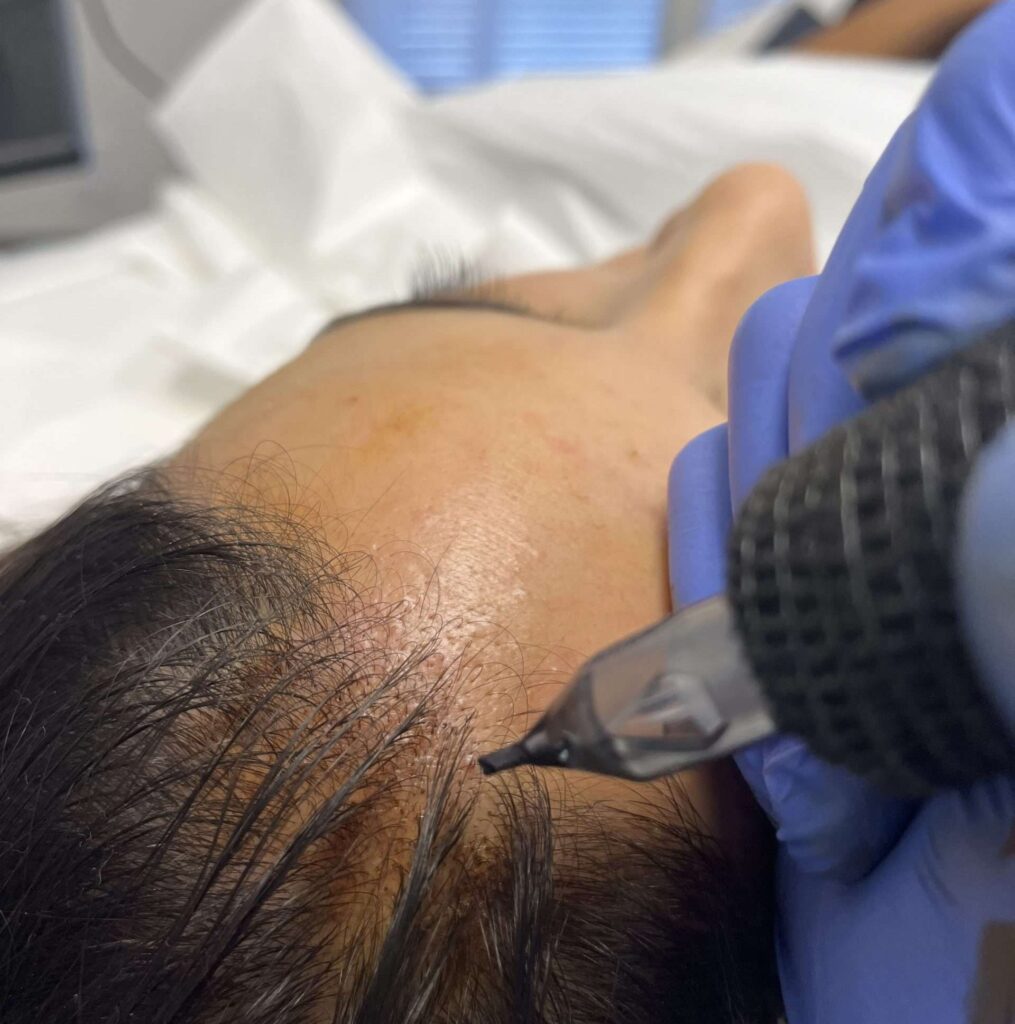
I explain scalp micropigmentation as a non-surgical cosmetic procedure that uses a specialized micro-needle and carefully matched pigments to replicate the appearance of natural hair follicles. It can create the look of a freshly shaved head, define a hairline, or add visual density to thinning hair. It does not grow new hair.
If you’ve been searching for a real, lasting solution to hair loss, thinning hair, or a receding hairline, you’ve probably come across the term scalp micropigmentation. I hear about it from new clients almost every week, and most of them say the same thing: “I wish I’d found this sooner.” So let me walk you through exactly what SMP is, how it works, and whether it might be the right fit for you.
What Is Scalp Micropigmentation (SMP)?
Scalp micropigmentation, commonly referred to as SMP, is a non-surgical, cosmetic hairline tattoo procedure that replicates the appearance of real hair follicles on the scalp. Using a specialized micro-needle and carefully matched pigments, an SMP artist deposits tiny impressions of pigment into the upper dermis of the scalp. The result looks like a natural, freshly shaved head of hair, or in the case of thinning hair, a fuller, denser appearance.
SMP is not a hair transplant. It doesn’t grow new hair. What it does is create the visual illusion of hair, and when it’s done well, it’s genuinely convincing. I’ve had clients walk out of their final session and go straight to a family dinner without a hat or hesitation, which tells me everything.
Who Is SMP For?
This is one of the most common questions I get, and the honest answer is: it’s for a much wider range of people than most expect.
- Men with male pattern baldness (androgenetic alopecia) – the most common reason men seek SMP, creating the look of a close-cropped, shaved head with a defined hairline.
- Women with thinning hair or diffuse hair loss – SMP can add the illusion of density along a widening part line or thinning crown without altering existing hair.
- People with alopecia areata or alopecia totalis – SMP can camouflage patchy hair loss or create a full scalp treatment for total hair loss.
- Those with scalp scars from surgery, trauma, or previous hair transplants – pigment can be carefully applied to blend scars into the surrounding scalp texture.
- Anyone seeking to restore confidence and reduce the daily stress of managing visible hair loss – that’s really what it all comes down to.
At The Micropigment Studio, I work with both men and women in the San Jose area and beyond. Hair loss doesn’t discriminate, and neither does SMP as a solution.
How Does Scalp Micropigmentation Work?
The process typically takes place over two to three sessions, spaced a few weeks apart. This layered approach allows the pigment to settle naturally into the skin and lets me build depth and dimension gradually, which is how we achieve that realistic, three-dimensional look.
Here’s a general overview of what the process involves:
- Consultation – We discuss your goals, review your hair loss pattern, talk through your ideal hairline shape, and I assess your skin tone and type to select the right pigment shades.
- Session one – A lighter, foundational layer of pigment is applied across the treatment area. Think of it as the sketch before the detail work.
- Session two – We build on the first layer, adding depth, refining the hairline, and increasing density where needed.
- Session three (if needed) – Final refinements, additional density, and any touch-ups to ensure everything looks seamless and natural.
Each session typically lasts between two and five hours depending on the treatment area. The sensation is often described as a light scratching or tapping. Most clients find it very manageable, especially compared to what they expected going in.
What Does SMP Actually Look Like?
When performed correctly by a skilled SMP artist, scalp micropigmentation looks remarkably natural. The key is in the detail: follicle size, pigment color, placement angle, and hairline design all have to work together. A hairline that’s too sharp, too straight, or too uniform will look artificial. The goal is always to mirror how real hair grows, with subtle irregularity and natural variation.
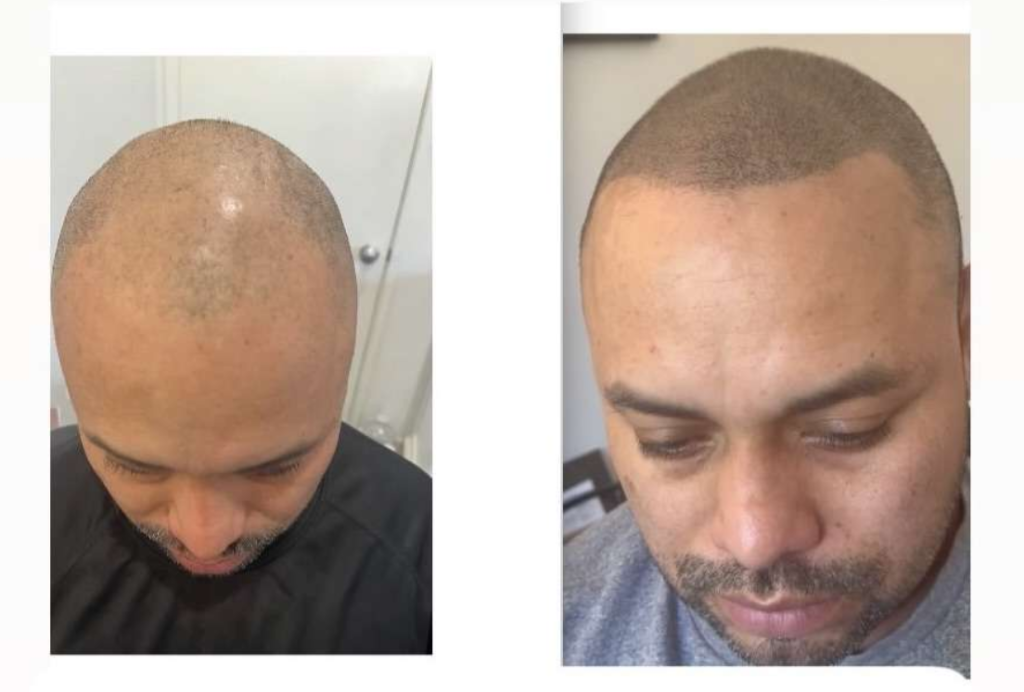
At The Micropigment Studio, I use pigments specifically formulated for scalp work, chosen to match your natural hair color and complement your skin tone. I was trained and certified by master trainer Shane Herrera at Scalp MicroNation and further trained by master trainer John Chandler at ScalpCo Academy. That level of focused, hands-on training matters enormously when the work is going on your head and face.
Is Scalp Micropigmentation Permanent?
SMP is considered semi-permanent to long-lasting. The pigment is deposited into the upper dermis, which means it will gradually fade over time as the skin naturally renews itself. Most clients see their SMP remaining crisp and defined for three to six years before a touch-up refresh is needed. Some clients go longer, some prefer to refresh sooner. Lifestyle factors like sun exposure and skin care habits play a role in how the pigment holds.
This is actually something I consider an advantage. Unlike a traditional tattoo, SMP gives you flexibility. As you age, your hairline can be softened and adjusted rather than being locked into one look permanently.
What’s the Difference Between SMP and a Regular Tattoo?
This is an important distinction that I always explain during consultations. Traditional tattooing uses different ink formulations that are designed to go deeper into the dermis and hold vivid, saturated color over time. SMP uses specialized pigments that are designed to stay closer to the surface, mimic the tone and scale of hair follicles, and fade predictably rather than turning blue or green as some tattoo inks do over time.
The needle configuration and machine settings are also different. SMP requires a very fine, precise application that’s completely different from decorative tattooing. It’s a paramedical cosmetic procedure, and it should be treated with that level of professional respect.
Does Scalp Micropigmentation Hurt?
Pain tolerance is personal, and I won’t pretend every client has the same experience. That said, the majority of my clients describe the sensation as mild to moderate discomfort, similar to a light scratching or a slight stinging in more sensitive areas like the temples or along the hairline. The crown of the head tends to be the most comfortable area to work on.
There’s no need for general anesthesia. A topical numbing cream can be applied before the session to minimize discomfort, and most clients settle in and relax once we get going. I always check in throughout the session to make sure you’re comfortable.
What About Aftercare and Recovery?
One of the things clients love about SMP is that the recovery is minimal. There’s no surgical downtime, no bandages, and no dramatic healing process. That said, proper aftercare is essential to getting the best result.
In the days immediately following each session, you’ll want to:
- Keep the scalp dry for the first four days.
- Avoid direct sun exposure on the treated area.
- Skip the gym and sweaty activities for a few days.
- Avoid picking or rubbing the scalp as it heals.
- Moisturize gently once the initial healing phase has passed.
I provide detailed pre and post-care instructions to every client at The Micropigment Studio. Following those instructions closely makes a real difference in how the pigment settles and how long it lasts.
How Much Does Scalp Micropigmentation Cost?
SMP pricing varies depending on the size of the treatment area, the degree of hair loss, and the number of sessions needed. A small scar camouflage treatment is a very different scope from a full scalp treatment for complete hair loss. I always provide a personalized quote during the consultation, so there are no surprises.
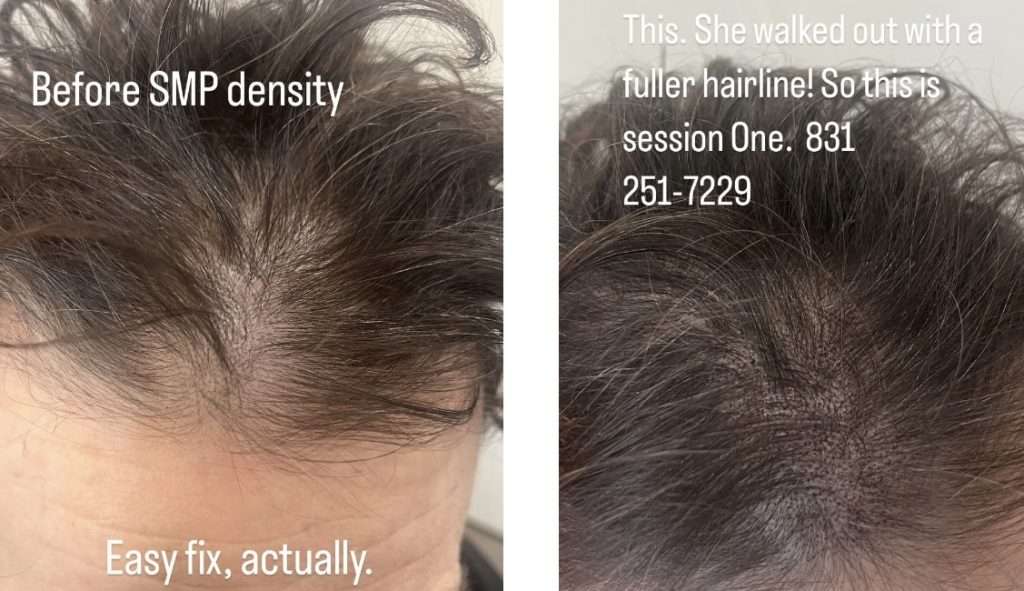
Hyper-realistic hair follicle tattoo
What I will say is this: SMP is an investment in yourself that pays off every single morning. No expensive hair products, no awkward styling, no bad hair days. Clients consistently tell me it’s one of the best investments they’ve ever made. Financing options are also available at The Micropigment Studio for those who want to spread the cost.
Why I Became Passionate About SMP
I’ve been working in micropigmentation and permanent cosmetics since 1989. I’ve watched this industry evolve significantly, and SMP stands out to me as one of the most genuinely life-changing services available today. The transformation isn’t just physical. Clients walk out looking different, but more importantly, they feel different. Confidence restored, self-consciousness reduced, life moving forward.
That’s why I pursued advanced SMP certification and continue investing in ongoing education every year. The craft matters, the outcome matters, and most importantly, you matter. If you’re considering SMP and you’re based in or near San Jose, California, I’d love to connect with you for a consultation and talk through what’s possible.
Frequently Asked Questions About Scalp Micropigmentation
Q1: What exactly is scalp micropigmentation?
Scalp micropigmentation (SMP) is a non-surgical cosmetic procedure in which an SMP artist uses a specialized micro-needle to deposit tiny pigment impressions into the upper layer of the scalp. These impressions replicate the look of natural hair follicles, creating the appearance of a shaved head, a defined hairline, or added hair density for those experiencing thinning. It is a paramedical tattoo technique that uses pigments specifically formulated for scalp work, designed to mimic the color and scale of real hair follicles rather than traditional tattoo ink, which behaves differently in the skin over time. SMP is suitable for men and women and can address a wide range of hair loss conditions, including male pattern baldness, female hair thinning, alopecia, and scalp scarring.
Q2: How long does scalp micropigmentation last?
Scalp micropigmentation is considered semi-permanent and typically remains visually strong and defined for three to six years, though many clients see results hold well beyond that timeframe. The longevity of SMP depends on several factors, including your skin type, how your skin metabolizes pigment, your level of sun exposure, and your general skincare routine. Oily skin types may find that pigment fades slightly faster, while drier skin types often hold pigment longer. When fading does begin, it tends to be gradual rather than sudden, meaning your SMP will look softer rather than patchy. A touch-up or refresh session can restore the original look. The fact that SMP fades over time is considered an advantage by many clients, as it allows the hairline to be adjusted as preferences or age-related changes occur.
Q3: Is scalp micropigmentation safe?
Yes, scalp micropigmentation is considered a safe procedure when performed by a trained, certified SMP artist using proper equipment and high-quality pigments in a clean, professional studio environment. At The Micropigment Studio, I follow strict sanitation and safety protocols. All needles are single-use and sterile, and pigments are specifically formulated for scalp application. As with any cosmetic procedure that involves the skin, there are standard precautions to be aware of, including the importance of disclosing any relevant medical conditions during your consultation. I have every new client complete a medical questionnaire before their first appointment to ensure SMP is appropriate for them. Serious adverse reactions are rare when proper protocols are followed, which is why choosing a certified, experienced SMP artist is so important.
Q4: Can women get scalp micropigmentation?
Absolutely, and this is something I feel strongly about raising awareness of, because SMP is often marketed almost exclusively toward men. Women experiencing hair thinning, diffuse hair loss, a widening part line, or reduced density at the crown are excellent candidates for SMP. The approach for women is typically different from the full scalp treatment used for male pattern baldness. For women, the SMP artist works between existing hairs to add the visual impression of greater density, reduce scalp show-through, and restore a fuller look without disrupting the natural hair. The results can be subtle and completely undetectable, which is often exactly what women want. Female hair loss can carry a significant emotional burden, and SMP can provide real, immediate relief from that stress. I work with female clients regularly at The Micropigment Studio and take great care in creating results that feel natural and confident.
Q5: How many SMP sessions will I need?
Most clients require two to three sessions to achieve their final result. The first session lays a foundational layer of pigment, and the second session builds depth, density, and definition. A third session is used for final refinements and ensures everything looks seamless, natural, and exactly right. Some clients with smaller treatment areas or minor concerns, such as scar camouflage, may be satisfied after just two sessions. Others with extensive hair loss may benefit from a third session to ensure full, even coverage. Sessions are spaced a few weeks apart to allow the skin to heal properly and the pigment to settle before the next layer is applied. During your consultation at The Micropigment Studio, I will give you a clear, honest assessment of how many sessions your specific case is likely to require so you can plan accordingly.
Q6: Will scalp micropigmentation look natural?
When performed by a skilled, experienced SMP artist, scalp micropigmentation looks remarkably natural and realistic. The key factors that determine how natural SMP looks include the size and shape of each pigment impression, the color match to your natural hair and skin tone, the design of the hairline, and the overall placement pattern. A well-designed hairline has subtle, organic irregularity rather than a perfectly uniform line, because that’s how real hairlines actually look. At The Micropigment Studio, I take a highly individualized approach to every client. I never use a one-size-fits-all template. Your facial structure, your natural hair growth pattern, and your personal preferences all inform how I design your treatment. The goal is always for people to notice that you look great, not to notice that you’ve had a procedure done.
