
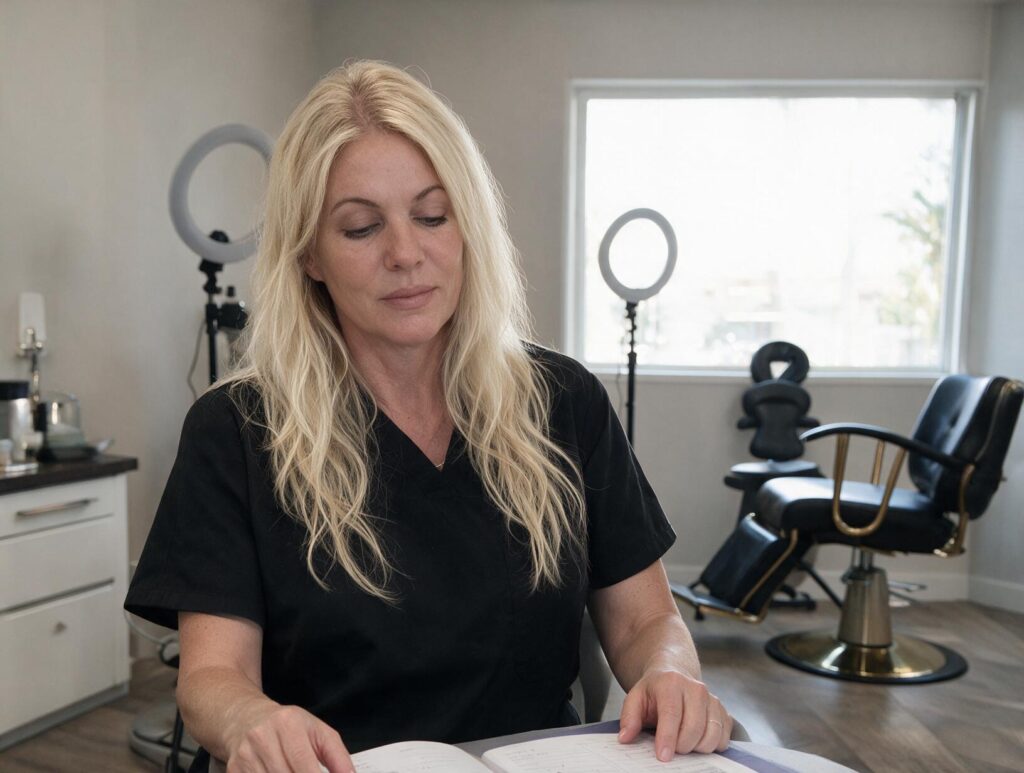
Yes. Scalp micropigmentation can reduce the contrast between your scalp and hair when thinning affects the sides, temples, crown or back of your head. I place carefully matched pigment between or around existing hairs to create the appearance of greater density. It does not regrow hair or change its natural growth.
How can scalp micropigmentation help men with hair loss on the sides or back?
When hair becomes thinner at the sides or back, the scalp can show through more clearly, especially in bright light or when the hair is cut short. That contrast often makes the area look more exposed than it feels when you look at it closely.
SMP works by placing tiny dots of cosmetic-grade permanent pigment in the scalp. I select the color to match your current hair follicle color. Then I layer the impressions so they suggest the presence of follicles. The visual effect can make sparse areas look less noticeable without surgery or transplanted hair.
For a man with existing hair, I can apply SMP between the hairs rather than treating only a completely shaved scalp. This is often called a density treatment. It may be suitable for thinning at the temples, behind the ears, the crown, the vertex or the back of the head. The exact plan depends on how much hair remains, the pattern of loss and how you normally wear your hair.
You can read my scalp micropigmentation treatment overview for a broader explanation of the procedure and what it is designed to do.
Will it work if the sides and back are also thinning?
It can, but I first assess your pattern rather than treating every area the same way. Hair loss on the sides or back may occur alongside male pattern hair loss, diffuse thinning, alopecia, scarring or changes following a hair transplant. Each situation affects the design, pigment placement and expected visual result.
If you still have hair in the area, I work with its direction, color and density. The goal is to soften visible scalp, not to paint a solid block beneath the hair. Some scalp showing through is normal. A natural result should retain variation in spacing and tone, because real follicles do not form a perfectly uniform pattern.
If the area is more extensively bald, we may discuss a shaved-head appearance instead. In that case, the hairline, side profiles and transition into the back of the head become particularly important. I consider your facial structure, age and existing hair pattern when discussing the hairline. A hairline that is too low, straight or dense can make the overall result look unnatural.
SMP does not grow hair, restore follicles or treat the cause of hair loss. It is a cosmetic way to conceal the visual difference between hair and scalp. If your loss is sudden, patchy or accompanied by scalp changes, seek appropriate medical assessment before proceeding. If you notice unusual thinning, it is sensible to have it checked medically before cosmetic treatment.
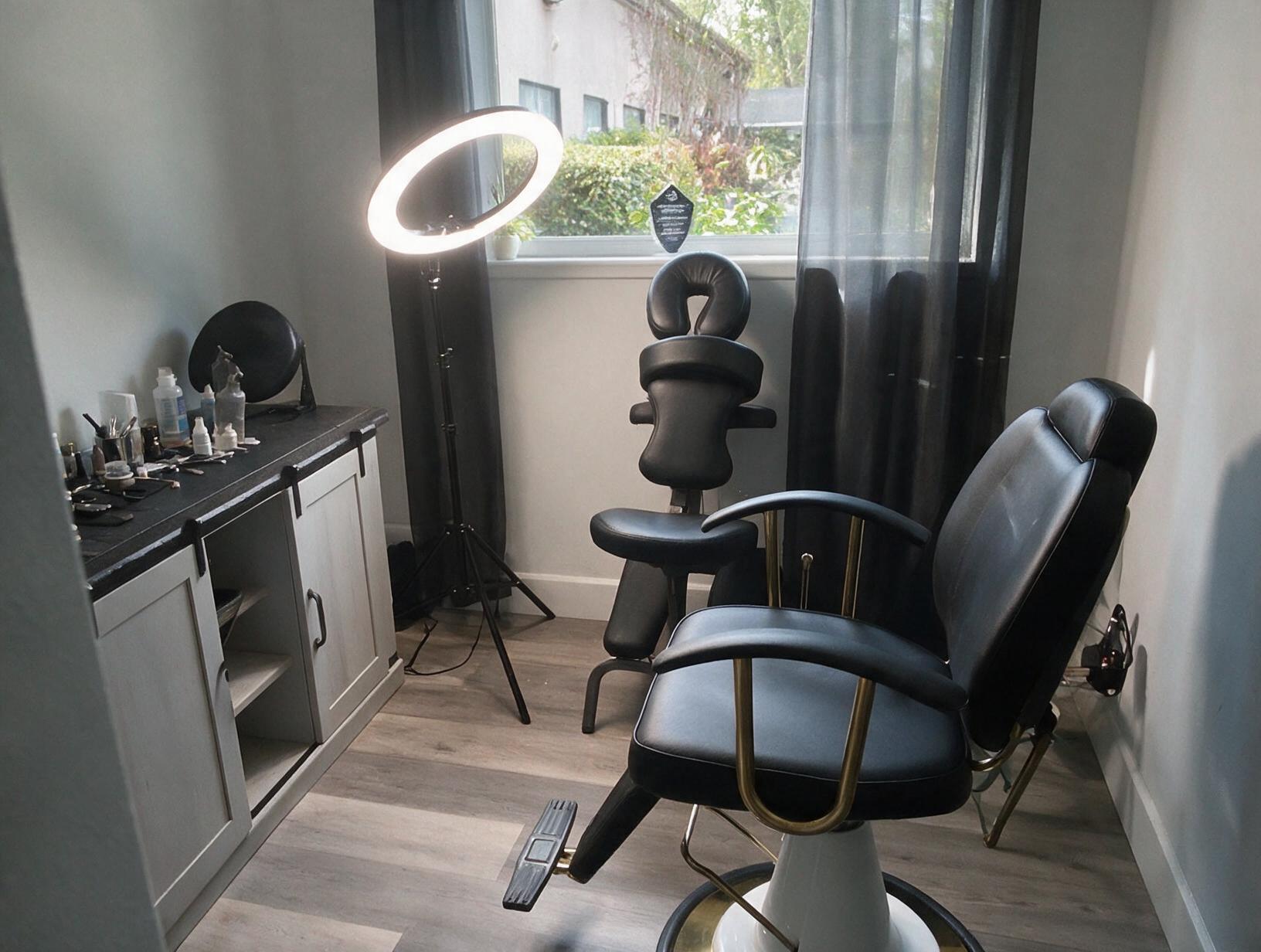
What happens before I treat the area?
We begin with a consultation. I want to understand how your hair loss developed, whether it is changing, how you style your hair and what you want the result to look like. We also discuss your medical history, skin, allergies and expectations. If you are prone to keloid scarring, SMP may not be appropriate.
Before treatment, wash your hair and scalp as advised. I mark the areas to be treated and discuss the hairline or density boundary with you before pigment is placed. Color matching is important because the pigment should relate to your current follicle color, skin tone and surrounding hair. I use numbing medicine to help manage discomfort, and I check in with you as I work.
I also recommend asking any prospective practitioner to show healed examples of their own work, not only immediately finished photographs. Pay close attention to hairline transitions, side profiles and treatment on a similar level of thinning. It is also reasonable to ask about training, licensing, bloodborne pathogens certification, pigments and hygiene.
My background includes certification in SMP from Scalp MicroNation in 2021 and further SMP training with ScalpCo Academy in 2022. I continue advanced training and ongoing education. My wider permanent cosmetics background includes esthetics, makeup artistry and micropigmentation.
How many treatments will the sides or back need?
The number and spacing of appointments varies with the treatment area, the density you want, your skin and the amount of existing hair. SMP is built gradually rather than saturated in one pass. A full course commonly involves several sessions spaced a few weeks apart, while a smaller area or later adjustment may follow a different plan.
Working gradually gives me the opportunity to assess how the pigment settles and refine the shape, spacing and color. It also helps us avoid creating an overly dark or flat appearance at the first appointment. Your result may look stronger during the early healing stage, then soften as the scalp heals.
SMP is intended to be long-lasting, but it is not unchanged forever. Natural exfoliation, sun exposure, skin type and other factors affect how quickly pigment fades. It does not wash out with shampoo. A future touch-up may be appropriate when the contrast returns or the color has softened. Although the treatment is intended to be permanent, it can be removed later with laser, so careful planning matters.
What should I do after treatment?
After the appointment, follow the specific aftercare instructions I give you. General aftercare information includes keeping the scalp dry during the initial healing period, using a shower cap when bathing, and avoiding heavy exercise, steam rooms and hot showers that cause sweating. Avoid direct sun on the scalp for several days.
During healing, avoid washing the treated area until advised. A thin layer of a petrolatum-based moisturizer, such as Aquaphor or Vaseline, may be recommended twice daily to help prevent scab formation. Do not pick or scratch any flaking or light scabbing. Once healed, use broad-spectrum sunscreen on the scalp to help protect the pigment over time.
Contact your practitioner if you notice unusual discomfort, excessive redness or swelling, warmth, or any concern that goes beyond what was discussed at consultation. This information is general aftercare guidance, not medical advice.
If you are considering treatment in San Jose, you can view Micropigment Studio contact and location information. A consultation is the best way to decide whether density or shaved-style SMP fits your pattern of loss.
Book a consultation when you are ready to discuss your sides, back and overall hair pattern without pressure.
Frequently asked questions
Can SMP cover thinning behind the ears?
It may be possible to place pigment in suitable thinning areas behind the ears, but the skin, hair direction and visibility of the transition need careful assessment. I would examine the area with your usual haircut and discuss whether blending it would look natural rather than treating it simply because pigment can be placed there.
Can I keep my hair long after side or back SMP?
Often, yes. Density SMP is designed to work between existing hairs, so you do not automatically need a shaved hairstyle. The best approach depends on your hair length, texture, color and the amount of scalp showing. I would plan placement around the way you normally wear and part your hair.
Can SMP hide a hair transplant scar on the back of the head?
SMP may camouflage some donor scars from strip or follicular unit extraction procedures by reducing the contrast between the scar and surrounding hair. Scar tissue can accept pigment differently from normal scalp, so I would assess its condition, texture and color before discussing whether treatment is realistic.
What if my hair loss is still progressing?
SMP can still be considered, but ongoing loss may change the balance between treated and untreated areas. During consultation, I would discuss how your current pattern and likely hairstyle affect the design. A conservative plan can be more adaptable than creating a dense, fixed boundary too early.
Does SMP damage the hair that is still growing?
SMP is intended to create a visual effect in the scalp and does not change natural hair growth or damage existing follicles when performed correctly. It does not make the hair grow faster or thicker. The procedure should be carried out by an experienced, properly licensed provider using appropriate hygiene and technique.
Can SMP be used for alopecia on the sides or back?
It may help conceal some areas affected by alopecia, but suitability depends on whether the condition is stable, the skin is healthy and the pattern is predictable. Active or changing hair loss needs careful discussion, and medical advice may be appropriate before cosmetic treatment. The pigment conceals the appearance rather than treating alopecia.
