
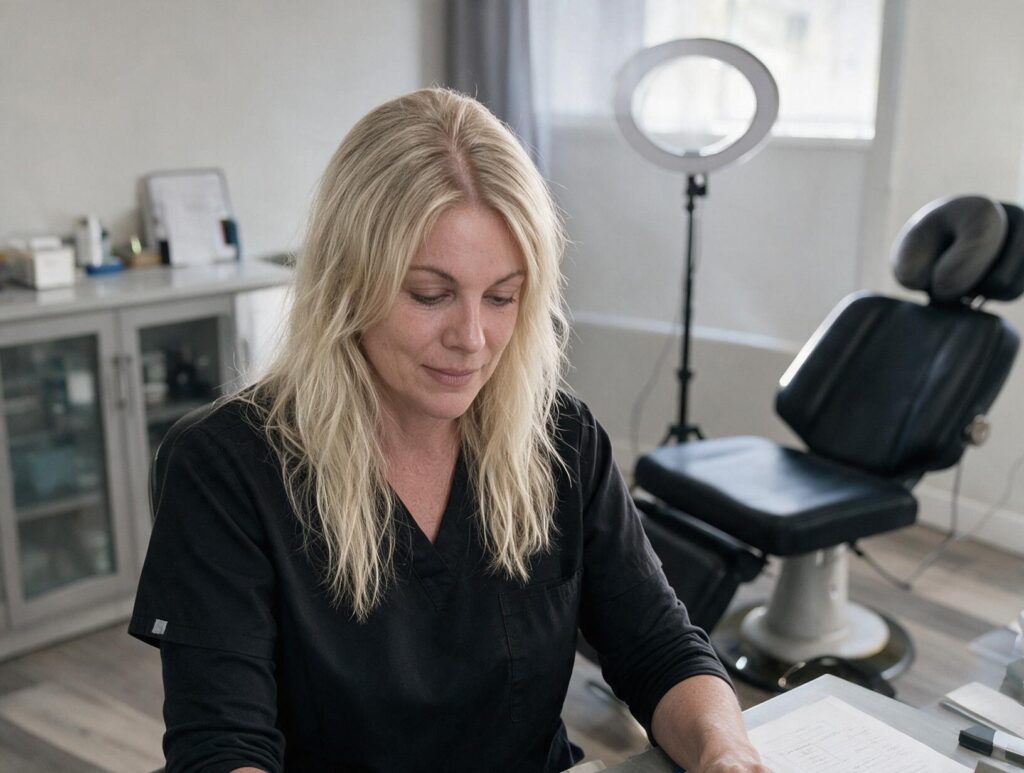
Yes, many people combine scalp micropigmentation with hair loss medication, but the two treatments do different jobs. Medication may help manage ongoing hair loss, while SMP creates the appearance of greater density or a closely shaved head. I recommend discussing your diagnosis, medication list, and timing with your doctor and SMP practitioner first.
What does each treatment do?
When clients ask me about hair loss treatment for men, I first separate medical treatment from cosmetic camouflage. Hair loss medication is intended to manage the biological process affecting the follicles. Scalp micropigmentation, or SMP, does not grow hair, change natural growth, or treat the cause of hair loss.
SMP is a non surgical cosmetic tattoo procedure. I place tiny dots of cosmetic grade pigment in the scalp to reduce the contrast between the skin and existing hair. This can create the appearance of a fuller head of hair, greater density between longer hairs, or a closely shaved follicle pattern.
That distinction matters. SMP can make thinning less noticeable, but it does not prevent future loss. Medication may support the hair you still have, while SMP addresses how the scalp looks today. Used together, they can be complementary rather than competing treatments.
You can read my scalp micropigmentation treatment overview for a fuller explanation of the process and what the procedure is designed to achieve.
Can finasteride or minoxidil be used with SMP?
Finasteride and minoxidil are commonly discussed options for male pattern hair loss. Some clients use one of these medicines before SMP, during the treatment plan, or afterwards. Whether either medicine is suitable for you is a medical decision, so I do not prescribe it or tell you to start, stop, or change it.
If your medication is helping preserve hair, SMP can be placed between existing hairs to reduce visible scalp show through. This is useful for clients who want to keep some length rather than shave their head. It may also complement someone who has previously relied on hair fibres for coverage.
Medication can also be part of a longer term plan after SMP. If you stop a medicine and your hair loss progresses, more scalp may become visible around the treated area. I therefore want to understand your expectations and whether your hair loss appears stable before we agree on a design.
Some medications can influence bleeding, healing, skin sensitivity, or how pigment settles. Please bring a complete and current medication list to consultation. If I have a concern, I may ask you to speak with the prescribing clinician before proceeding.

Should I wait until my hair loss is stable?
There is no single waiting period that suits everyone. The right timing depends on your diagnosis, the pattern and speed of loss, your medication plan, and whether you intend to keep your hair longer or wear it closely cropped.
A medical diagnosis should come first when the cause is uncertain. SMP does not diagnose, prevent, or treat an underlying disease. Sudden shedding, patchy loss, scalp inflammation, or a rapidly changing pattern deserves medical attention rather than cosmetic treatment alone.
For suspected female pattern hair loss, blood tests may be needed to exclude other diseases, metabolic conditions, or hormone imbalances that can create a similar pattern. The same principle applies to anyone considering SMP: understand the cause before using camouflage.
At consultation, I assess the scalp, existing hair, skin, lifestyle, medical history, and expectations. I mark possible treatment areas, discuss a hairline where relevant, and match the pigment to your current hair and follicle color. For a fully bald client, the hairline should suit facial structure and age rather than look artificially low or rigid.
What should I look for in an SMP provider?
Hairline work is one of the most important things to review. A poorly designed hairline can make otherwise careful SMP look unnatural. I encourage prospective clients to examine healed examples, not only fresh photographs, and to ask how the practitioner approaches density, color, depth, and future changes in hair loss.
Choose a licensed and experienced cosmetic or body artist. Ideally, the practitioner should have appropriate county licensing, a current bloodborne pathogens certificate, and relevant professional training. You should also disclose allergies and any history of keloid scarring. SMP should be avoided by clients who are prone to forming large keloid scars.
I completed SMP training with Scalp MicroNation in 2021 and trained again with ScalpCo Academy in 2022. I continue advanced training and ongoing education each year. My studio is in Willow Glen, San Jose, and I provide male density, female, and shaved SMP services.
Numbing is used during the procedure, and we can discuss whether a small patch test on an inconspicuous area makes sense for you. These steps do not remove every possible risk, so a thorough consultation remains important.
How should I plan medication around the procedure?
Do not stop prescribed medication simply to prepare for SMP. Ask the prescribing clinician whether your medicine affects bleeding, healing, or skin response, and follow their instructions. Tell me about topical products, oral medicines, supplements, allergies, recent procedures, and any scalp condition.
Before treatment, wash your hair and scalp. We agree on the treatment area and hairline, match pigment, and prepare the skin before I begin. SMP deposits pigment in the epidermal and upper dermal layers, unlike a traditional body tattoo, so controlled placement is essential for a natural result.
Afterward, keep the scalp dry during the initial healing period. Use a shower cap when bathing, avoid heavy exercise, steam rooms, hot showers that cause sweating, and direct sun exposure for several days. Follow the aftercare instructions provided at consultation, including any advice about a petrolatum-based moisturizer and long-term broad-spectrum sunscreen.
Healing can include temporary darkness, flaking, or light scabbing. Do not pick or scratch the area. Contact your practitioner if you notice increasing warmth, redness, swelling, unusual discomfort, or another concern beyond what was discussed.
What result can I realistically expect?
The result should look like visual density, not a scalp painted with a solid layer of color. Some scalp showing through existing hair is normal. Good SMP uses varied, carefully placed impressions so the result blends with your hair and complexion.
Results are intended to be long lasting, but pigment gradually fades through natural skin exfoliation. Sun exposure, skin type, metabolism, medications, and other hair loss treatments can affect longevity. A later touch up may be appropriate, and SMP can be removed with laser treatment if necessary. Removal is more predictable when the original work was placed correctly.
My aim is to help you decide whether SMP fits your wider plan, rather than present it as a replacement for medical care. Bring your questions and medication list to a consultation at Micropigment Studio through the studio contact and location page.
You are welcome to book a consultation whenever you feel ready.
Frequently asked questions
Can I use hair fibres after having SMP?
Whether hair fibres suit you, and when to use them during healing, is something to ask your practitioner. SMP is designed to reduce visible contrast at the scalp, so some clients find they need fewer fibres, particularly after treatment between existing hairs.
Will SMP interfere with future hair transplant surgery?
SMP does not prevent a future transplant, but your plans should be discussed before treatment. The design, density, and hairline need to allow for possible changes. SMP may also be used later to reduce the appearance of donor scarring or add visual density between transplanted hairs.
Can SMP be performed if I have a scalp condition?
Active inflammation, infection, irritation, or an undiagnosed scalp condition should be assessed before cosmetic tattooing. Tell your practitioner about symptoms, recent diagnoses, and treatment. Proceeding may need to wait until the skin is suitable, because compromised skin can heal unpredictably and increase the risk of complications.
Does SMP work with blonde, brown, or gray hair?
SMP can be adapted for different hair colors and skin tones. Pigment selection is based on your current follicle or hair color and complexion, rather than using one standard shade. A consultation is important if your hair is light, gray, colored, or likely to change after treatment.
How many appointments will combining treatments require?
The number and spacing of SMP appointments varies with the area, hair pattern, skin response, and design. The number of sessions varies and I assess it individually at consultation. Medication reviews, medical clearance, and any treatment changes can also affect the schedule.
