
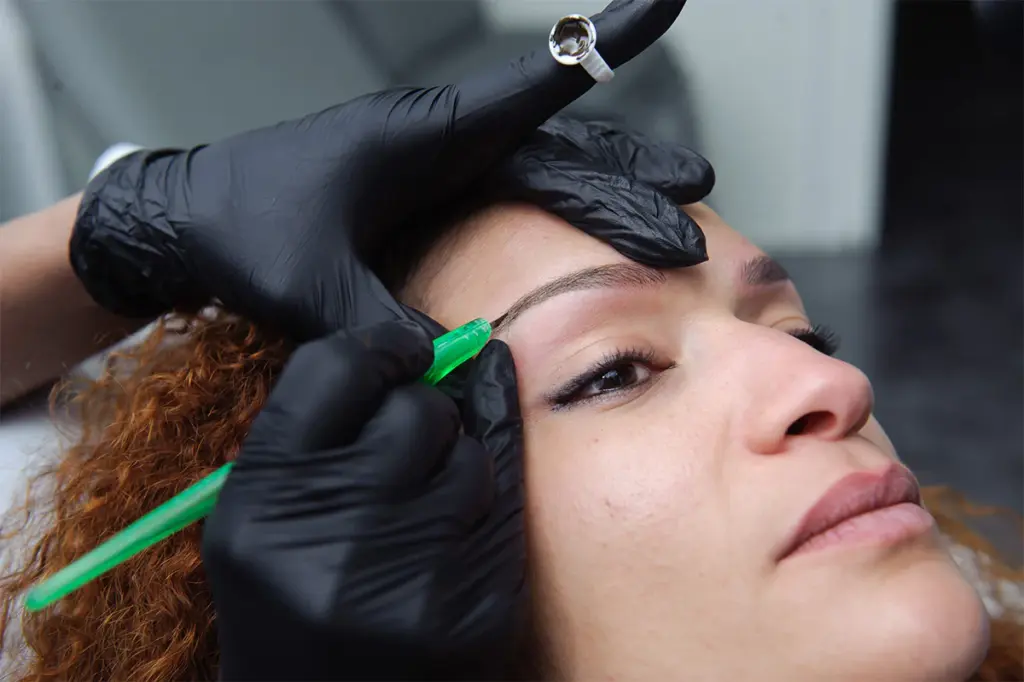
I explain that SofTap before-and-after photos show only two points in a six-to-eight-week healing journey. Fresh brows look bold, then lighten about 30 to 40 percent, may appear patchy or ghostly while healing, and are refined at a perfecting session. Skin type and careful aftercare also influence the final healed result.
You’ve seen the side-by-side photos and you want that result for yourself. But microblading before and after images only ever capture two moments, and the journey between them is full of small changes nobody warns you about. I want to walk you through what actually happens between your appointment day and the photo I take at your perfecting session, what affects the final look, and why the SofTap method I use at my studio produces a different healing journey than the traditional bladed method most people are familiar with. Here are five things every photo leaves out.
1. The freshest strokes are always the darkest you’ll see
Right after your SofTap appointment, the pigment sits at its most intense. Strokes look crisp, defined, and noticeably bold. This is not your finished result. The color you see walking out of the studio will lighten by about 30 to 40 percent as the skin heals over the following weeks.
A quick word on why SofTap heals differently from bladed microblading. SofTap is a manual, hand-tapped technique that I’m certified in through the SofTap Permanent Cosmetic Academy in Livermore, California. Instead of cutting tiny incisions into the skin, SofTap uses disposable hand tools to tap pigment in gently. That means less trauma, less inflammation, and a more controlled lightening process during healing. With bladed microblading, fading during healing can run as high as 50 percent because the wounds heal less evenly. SofTap clients often see a softer, more predictable settling phase.
By day three to five you’ll likely see some light flaking over the strokes. As that flaking lifts, brows can look patchy or muted, which is completely normal. The pigment is settling into the upper layers of skin, not disappearing. Patience here matters.
2. The real transformation reveals itself around week six
Most genuine before and after photos are taken at the six to eight week mark, and that timing isn’t arbitrary. That’s when the pigment has fully matured in the skin and the true color, softness, and stroke definition become visible. Anything earlier than that is still mid-process.
A perfecting session at around six to eight weeks is part of every SofTap microblading plan I create. This appointment is where I refine areas that healed unevenly, add density where pigment lightened more than expected, and finalize the shape now that we can see how your skin actually held the work. The two-session structure is what produces the finished result you see in professional photos. It isn’t optional, and it isn’t an upsell. It’s how SofTap is designed to be delivered.
3. Skin type shapes outcomes, but SofTap is more forgiving
The standard advice you read online is that bladed microblading performs best on normal to dry skin, and that oilier skin types should look elsewhere. That advice holds true for bladed methods, but it doesn’t tell the full story for SofTap.
Because SofTap places pigment into the skin through controlled tapping rather than through open blade incisions, the deposit holds more securely against sebum movement. Clients with oilier skin still see some pigment lightening compared to drier-skin clients, but the healed result is typically softer, more natural, and more predictable than what bladed microblading can deliver on the same skin. Your skin type is assessed at consultation, and I’ll be honest with you about realistic expectations before any work begins.
This is one reason a lot of clients who were told microblading wasn’t for them end up happy with their SofTap result.
4. Healing is not linear, and days four to seven are the hardest
The mid-healing phase is where most people worry unnecessarily. Around days four to seven, brows look noticeably lighter, sometimes almost ghostly. The outer layer of skin is repairing itself over the pigment, temporarily muting the color. This is the body working exactly as it should, and it doesn’t predict your final result.
A few tips for getting through this window cleanly:
- Do not pick at any flaking, even if it’s tempting. Premature lifting can pull pigment out with it and create gaps in the stroke pattern.
- Keep the brow area dry. Avoid swimming, saunas, heavy sweating, or hot showers that direct water onto the brows.
- Sleep on your back if you can manage it, to prevent pillow contact during the most vulnerable healing days.
- Do not apply skincare products, moisturizers, or oils directly to the brows.
Trust the process. By day ten to fourteen, color starts to reappear as the surface skin finishes its repair cycle.
5. Aftercare directly determines what your final photos look like
Two clients can walk out of the same appointment with identical work and end up with noticeably different healed results at six weeks, purely based on how they cared for their brows at home. The work I do in the chair is only half the equation. Your skin’s healing environment is the other half.
Things that consistently undermine SofTap healing:
- Direct sun exposure on freshly healed pigment, which accelerates fading dramatically
- Tretinoin, retinol, glycolic acid, and other AHA-based skincare anywhere near the brow area, both during healing and long-term
- Touching, rubbing, or picking at the brows during the first two weeks
- Excessive sweating, steam, or chlorinated water during healing
- Skipping the perfecting session or pushing it past the eight week window
Following your personalized aftercare instructions precisely is what gives the pigment the best chance of healing with clarity, definition, and the longevity that SofTap is known for.
The bottom line on SofTap before and after photos
SofTap microblading transformations are real, and the before and after photos you see from my clients reflect actual results. But those photos only show two moments out of a six to eight week story. Understanding what happens between those two photos, how your skin type influences the journey, and how aftercare seals in the final outcome gives you a much more accurate picture of what your own brow transformation will look like.
If you’re in Santa Clara or the surrounding area, you can call or text the studio at 831-251-7229 to schedule a SofTap consultation. Our new studio location at Santa Clara, will give clients another option for SofTap brow sessions.
Frequently Asked Questions
How long does it take to see the final SofTap microblading result?
The final SofTap result is visible around six to eight weeks after your initial session, once the skin has fully healed and pigment has matured. A perfecting session at the six to eight week mark refines the outcome, and the final healed result of that perfecting session is usually visible another four to six weeks after. Before those checkpoints, the color, softness, and stroke definition are all still changing as the healing process progresses. If you’re judging the result before week six of either session, you’re judging it too early.
Why do SofTap brows look so dark immediately after the appointment?
Fresh pigment sits closer to the surface immediately after any microblading procedure and appears at its most saturated. SofTap is no exception, although the day-one intensity is typically less dramatic than with bladed microblading because the deposit method is more controlled. As the skin heals and any light flaking lifts over the following days, the color softens significantly. Most SofTap clients see about 30 to 40 percent lightening before the brows settle into the final healed shade, which is why I always tell clients not to judge results in the first two weeks.
Is SofTap microblading suitable for oily skin?
Yes, SofTap is generally more suitable for oily skin than traditional bladed microblading. The hand-tapped method places pigment more securely into the upper layers of skin, and the healed result has a softer texture that camouflages minor pigment movement well. Clients with oily skin still see some lightening during healing and may need refreshes slightly sooner than drier-skin clients, but most are happy with their results and prefer SofTap to other brow options. I assess skin type at consultation and give realistic guidance based on what your specific skin can hold.
What should I do if my SofTap brows look patchy during healing?
Patchy brows during the first two weeks of healing are completely normal. As light flaking lifts over the freshly tapped strokes, it can take pigment unevenly with it, leaving some areas looking lighter than others temporarily. This is exactly why the perfecting session is built into your treatment plan at six to eight weeks. At that appointment I add density where pigment has lightened, refine stroke spacing, and complete the design now that we can see how your specific skin held the work. Resist the urge to assume something is wrong during the patchy phase.
How does aftercare affect SofTap before and after results?
Aftercare has a direct, measurable impact on healed SofTap results. Sun exposure, heavy sweating during the first two weeks, swimming, picking at flaking skin, and using retinoids or chemical exfoliants near the brow area all cause pigment to fade faster than it should. Following your personalized aftercare instructions precisely gives the strokes the best chance of healed clarity, color trueness, and long-term durability. Most clients who follow the protocol see results that last two to three years on dry to normal skin before a refresh is needed.
Why is a SofTap perfecting session part of the treatment plan?
I use the perfecting session to refine areas that healed unevenly, add density where pigment lightened more than expected, and finalize the shape once I can see how your skin held the work. The session is built into the SofTap process because the finished result develops across two appointments, not one.
