
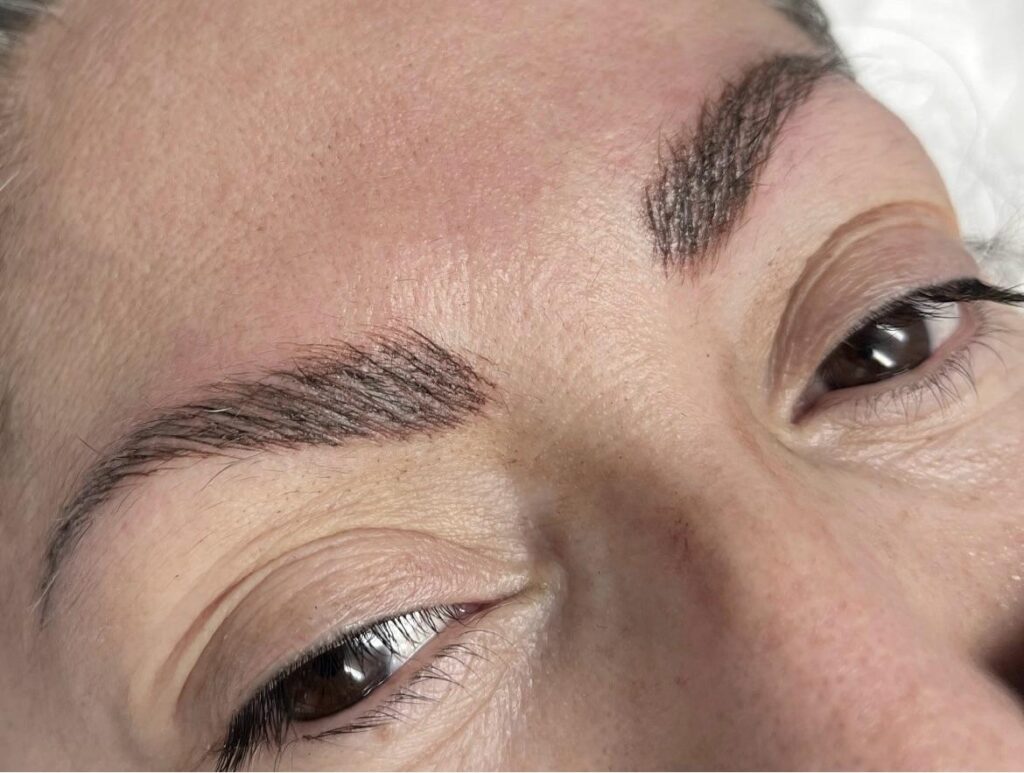
I explain that microblading uses a handheld blade to place pigment in the upper skin layers, creating fine hair-like strokes that fade naturally over one to three years. A traditional eyebrow tattoo uses a machine to place ink deeper in the dermis, making it permanent and more likely to blur or shift color over time.
When clients come to me asking about their brow options, one question comes up more than almost any other: what exactly sets microblading apart from a regular eyebrow tattoo? Both techniques involve depositing pigment into the skin, but the similarities largely end there. Understanding the distinctions can help you make a confident, informed choice for your face.
Technique and tools: a fundamental difference
Microblading uses a handheld blade — not a machine — to manually deposit pigment into the upper layers of the skin, creating fine, hair-like strokes that mimic the appearance of natural brow hairs. This manual approach gives a skilled practitioner exceptional control over depth, direction, and stroke placement.
A traditional eyebrow tattoo, by contrast, uses a rotary or coil machine to push ink deeper into the dermis. This deeper placement is precisely what creates one of the most noticeable eyebrow tattoo differences over time: the ink tends to spread and blur, and pigments can shift to a blue-grey or greenish tone as the years pass. Microblading pigments, sitting higher in the skin, tend to fade more cleanly and gracefully.
It is also worth noting that machine hairstrokes — sometimes called nano brows — are a separate technique altogether. Nano brows use a digital device and should not be confused with microblading, even though both produce hair-stroke results.
Longevity, fading, and what to expect
One of the central points in any permanent makeup versus microblading conversation is how long results last. Traditional eyebrow tattoos are genuinely permanent — the ink sits deep enough that it does not fully fade, which can become a concern as fashions and facial features change over time.
Microblading typically lasts between one and three years before a colour refresh is needed. Because the pigment lives in the upper skin layers, it fades gradually and naturally. For most clients, this is an advantage: it allows for adjustments as brow trends evolve or as the face changes with age.
Annual touch-ups are generally recommended to maintain crisp, defined strokes. Without a refresh, strokes will lighten and soften rather than turn an unflattering colour — a meaningful distinction when weighing up permanent makeup versus microblading as long-term options.
Skin type, pain level, and suitability
Microblading works best on normal to dry skin. On oily skin, the strokes can blur or fade more quickly as excess sebum interferes with how pigment settles. If you have particularly oily skin, I may recommend nano brows or a combination technique as a more suitable alternative.
In terms of discomfort, microblading can cause slightly more skin trauma and scabbing than machine-based methods, because the manual blade makes precise incisions in the skin. A topical numbing cream is always applied beforehand, and most clients find the sensation manageable — comparable to light scratching. Aftercare is straightforward but important: keeping the area dry and avoiding picking at any scabbing supports the best possible healed result.
Traditional tattooing goes deeper and uses a more aggressive needle action, which many clients find more uncomfortable. The healing process also tends to be longer, and the skin can appear bolder or harsher immediately after treatment.
Which option is right for you?
If you want soft, natural-looking brows that can be adjusted over time, microblading is likely the better choice — particularly if you have normal or dry skin and want results that fade cleanly. It suits clients who prefer a low-maintenance routine but still want flexibility as their preferences change.
A traditional eyebrow tattoo may appeal to those seeking a truly permanent solution and a bolder aesthetic, though it is worth going in fully informed about how the results can shift in colour and shape over the years. At Micropigment Studio, I take the time to assess your skin type, brow goals, and lifestyle before recommending any technique, because the right choice is always the one that suits you specifically.
Frequently Asked Questions
What is the main difference between microblading and a traditional eyebrow tattoo?
Microblading uses a handheld blade to deposit pigment into the upper skin layers, creating natural hair-like strokes that fade gradually over time. A traditional eyebrow tattoo uses a machine to push ink deeper into the dermis, making it permanent and more prone to colour shifting towards blue-grey or green tones over the years.
Is microblading suitable for oily skin?
Microblading is best suited to normal or dry skin. On oily skin, excess sebum can cause strokes to blur or fade more quickly after healing. For clients with oily skin, I often recommend nano brows or a combination technique, which tend to hold up better and produce longer-lasting, crisper results.
How long does microblading last compared to an eyebrow tattoo?
Microblading typically lasts one to three years before a colour refresh is needed, as the pigment sits in the upper skin layers and fades naturally. A traditional eyebrow tattoo is genuinely permanent, as the ink is deposited much deeper. Annual touch-ups help maintain the best results with microblading.
Is the microblading process more painful than getting an eyebrow tattoo?
Microblading can cause slightly more localised skin trauma than some machine techniques, though a topical numbing cream is applied beforehand. Most clients describe the sensation as light scratching. Traditional tattooing goes deeper and can feel more intense. Pain tolerance varies, but most people find microblading very manageable with proper numbing.
How is microblading different from nano brows or machine hairstrokes?
Microblading uses a manual handheld blade with no machine involvement, while nano brows use a digital device to create hair strokes. Both produce similar hair-stroke aesthetics, but nano brows are often better suited to oily or sensitive skin. Understanding these eyebrow tattoo differences helps ensure you choose the technique best matched to your skin type.
What aftercare helps microblading heal well?
I recommend keeping the treated area dry and avoiding picking at any scabbing during healing. This supports the best possible healed result. Microblading can cause some skin trauma and scabbing because the manual blade makes precise incisions, so following straightforward aftercare is important while the area heals.
