
I typically recommend two to three SMP sessions, although some clients need a fourth. The exact number depends on factors such as the extent of hair loss, skin type, pigment retention, and the density and definition you want. During your initial consultation, I assess these factors and create a realistic treatment plan for your situation.
One of the first questions I get from almost every new client is, “How many sessions will I need?” It’s a completely fair question, and honestly, it’s one of the most important things to understand before you commit to scalp micropigmentation. The short answer is that most people need between two and four sessions. But the real answer is a little more nuanced than that, and I want to walk you through exactly what influences the number of visits your treatment will require.
I’ve been working in micropigmentation for decades, certified by master trainer Shane Herrera at Scalp MicroNation and again by master trainer John Chandler at ScalpCo Academy. Over that time, I’ve learned that no two scalps are the same, and no two treatment plans should be identical either. The session count isn’t arbitrary. It’s determined by a combination of factors that I assess carefully during your initial consultation at The Micropigment Studio here in Willow Glen, San Jose.
Why SMP Always Requires More Than One Session
Scalp micropigmentation is a multi-session procedure by design, not because it takes longer to “finish,” but because the skin heals and retains pigment differently from person to person. The first session lays the foundation. It establishes the hairline design, the general pigment tone, and the initial density of follicle impressions across the treatment area.
After that first session, your scalp goes through a healing process that typically takes around 10 to 14 days. During that time, some pigment fades, some areas lighten more than others, and the true result begins to reveal itself. That’s exactly why we don’t try to achieve the final look in a single visit. Doing so would almost certainly lead to over-saturation and an unnatural, heavy appearance that doesn’t serve you well.
The second session is where we refine, build density, and address any areas where the pigment settled lighter than expected. By the third session, most clients are at or very close to their final result. Some clients need a fourth session for fine-tuning, while others are completely done after two.
Key Factors That Influence How Many Sessions You’ll Need
There’s no single formula, but there are clear factors that consistently influence the session count.
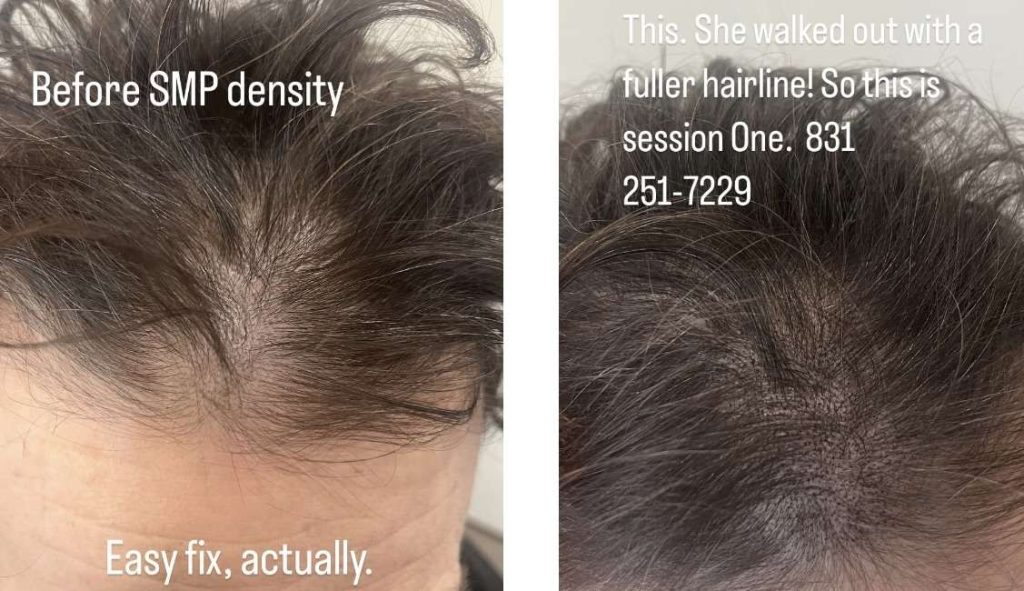
Here’s what I look at when I’m building your treatment plan.
1. The Extent of Hair Loss
This is probably the most straightforward factor. A client who is covering a receding hairline at the temples is working with a much smaller surface area than someone who has complete or near-complete hair loss across the entire scalp. Larger coverage areas typically require more sessions to build even, realistic density without rushing the pigment layering process.
- Mild thinning or hairline refinement: typically 2 sessions
- Moderate hair loss across the crown or top: typically 2 to 3 sessions
- Extensive or complete hair loss (Norwood 5 to 7): typically 3 to 4 sessions
2. Your Skin Type and Texture
Skin plays a huge role in how pigment is absorbed and retained. Oily skin tends to cause pigment to spread slightly more, which means I work more conservatively in the early sessions to avoid over-saturation. Dry or mature skin can sometimes require more passes to achieve full density. Clients with scarring from hair transplants or other procedures may need additional sessions because scar tissue absorbs pigment differently than healthy skin.
This is also why I always do a thorough skin assessment before we begin. Understanding your skin means I can predict how it will heal and plan the number of sessions accordingly, rather than guessing and correcting later.
3. Desired Hairline Style and Look
The level of definition and realism you’re going for directly affects session count. A soft, diffused look with a subtle hairline is generally achievable in fewer sessions. A sharp, detailed hairline with high density across a larger area takes more precision, more layering, and more time to build correctly.
I take the time in every consultation to understand exactly what result you’re hoping for, because that expectation directly shapes the treatment roadmap. There’s no one-size-fits-all approach here.
4. Pigment Retention and Skin Healing
Some people’s skin retains pigment beautifully after the very first session. Others naturally metabolize pigment faster, especially in areas with high sun exposure or where the skin turns over more quickly. Age, hydration levels, sun damage, and even certain medications can all influence how well your skin holds the pigment between sessions.
I always tell my clients that the healing period between sessions is just as important as the sessions themselves. Proper aftercare, staying out of the sun, and keeping the scalp moisturized all contribute to better pigment retention and can reduce the total number of sessions needed.
5. Whether You’ve Had Previous SMP Elsewhere
Clients who come to me for a correction or refresh of previous SMP work present a unique situation. Depending on the quality of the prior work, the pigment used, and how much fading has occurred, the number of sessions needed can vary considerably. Some corrections are straightforward. Others, particularly where the wrong pigment tone was used or where there’s significant blowout or spreading, may require more sessions and a more careful approach.
I’ve worked with clients who had SMP done elsewhere that didn’t meet their expectations, and I always assess the existing work thoroughly before building a new plan.
The Typical Session Schedule at The Micropigment Studio
For most of my clients here in Willow Glen, the treatment schedule looks something like this:
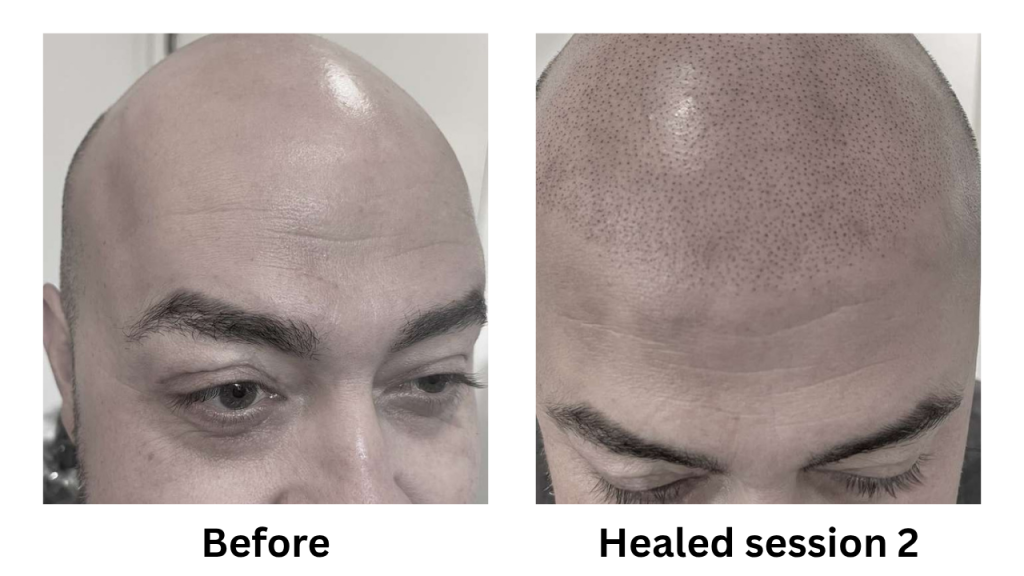
- Session 1: Foundation session. We establish the hairline design, the pigment tone, and begin building the initial follicle impression pattern across the treatment area.
- Session 2 (10 to 14 days later): We assess how the pigment has healed, refine the design, add density, and address any areas that faded more than expected.
- Session 3 (another 10 to 14 days later): For most clients, this brings the result to completion. Density is finalized, blending is perfected, and the overall look is polished.
- Session 4 (if needed): A small percentage of clients, particularly those with large treatment areas, very oily skin, or a desire for a very dense, defined finish, benefit from one final refinement session.
Sessions are spaced apart intentionally. Rushing the process doesn’t produce better results. It produces unpredictable ones. I’ve seen what happens when sessions are stacked too closely together, and it’s never worth it. The skin needs time to fully heal and reveal the true pigment color and retention before we layer any further.
What About Touch-Ups After the Initial Treatment?
Once your initial SMP treatment is complete, you can expect the results to last several years before a touch-up is needed. Most clients return for a maintenance session every three to five years, depending on skin type, sun exposure, and lifestyle. It’s a manageable long-term commitment and one that keeps your result looking fresh and natural over time.
I always recommend clients use a good SPF on their scalp once fully healed. UV exposure is one of the biggest contributors to pigment fading, and a simple sunscreen habit can significantly extend the life of your SMP result.
Why the Consultation Matters So Much
I know it might be tempting to try to figure out your session count before you even come in, but the truth is, I can’t give you a precise number until I see your scalp in person. Every factor I’ve described above needs to be assessed directly. That’s why I offer a thorough new client consultation at The Micropigment Studio before any treatment begins.
During that consultation, we talk about your goals, examine your scalp and skin type, discuss your lifestyle and aftercare capacity, and build a realistic plan together. By the end of that conversation, you’ll have a clear, honest picture of what your treatment will involve, how many sessions to plan for, and what to expect at every stage of the process.
If you’re in the San Jose area or nearby, I’d love to meet with you and answer your questions in person. And if you’re in or around Santa Clara, keep an eye out because a new hair loss solution is coming your way very soon.
Frequently Asked Questions
Q1: How many SMP sessions does the average person need?
Most clients at The Micropigment Studio complete their SMP treatment in two to three sessions, with a smaller number of clients requiring a fourth. The exact number depends on factors including the extent of hair loss, skin type, pigment retention, and the density and definition of the look you’re going for. During your initial consultation, I assess all of these factors and give you a realistic estimate specific to your situation. It’s never a one-size-fits-all answer, and I won’t pretend otherwise. What I can tell you is that we never rush the process. Each session builds carefully on the last to achieve a natural, long-lasting result.
Q2: How long do I wait between SMP sessions?
The recommended spacing between sessions is typically 10 to 14 days. This allows your scalp sufficient time to heal fully from the previous session and for the pigment to settle into its true healed color. Going back too soon doesn’t speed up the process. In fact, it can interfere with the healing skin and lead to uneven results. I schedule all sessions at The Micropigment Studio with this healing window in mind, and I always review how your scalp has healed before proceeding with the next session. Proper spacing is one of the key reasons why our results look so natural and refined.
Q3: Does skin type affect how many SMP sessions I’ll need?
Absolutely, skin type is one of the most significant factors I consider when planning a treatment. Oily skin tends to spread pigment more readily, which means I apply it more conservatively to avoid over-saturation, sometimes requiring an additional session to build density safely. Dry or mature skin may absorb pigment differently and occasionally needs more layering. Scar tissue from prior hair transplants is another consideration, as it retains pigment differently than healthy scalp skin. I conduct a thorough skin assessment during every consultation so the session plan reflects your unique skin characteristics, not a generic template.
Q4: Can I get SMP done in just one session?
SMP cannot be properly completed in a single session, and any practitioner who tells you otherwise is not giving you accurate information. The multi-session approach exists for a very specific reason: skin heals unpredictably, and pigment fades and settles differently in everyone. Attempting to achieve the full, final result in one visit would require over-depositing pigment, which leads to an unnatural, blotchy, or overly saturated appearance. The layered approach I use at The Micropigment Studio is what produces results that look realistic, refined, and age well over time. Two to four sessions is the standard for a reason, and it’s one I follow with every client.
Q5: How long does each SMP session take?
Session length varies based on the size of the treatment area and what stage of the process we’re in. A first session, which involves designing the hairline and covering the primary area, typically runs between three and five hours for a full scalp treatment. Subsequent sessions are often shorter, usually two to four hours, since we’re refining and building on established work rather than starting from scratch. Smaller treatment areas, such as a receding hairline or a specific thinning zone, will take considerably less time. I always give clients a realistic time estimate ahead of each appointment so you can plan your day accordingly.
Q6: When will I need a touch-up after my initial SMP treatment is complete?
After completing your initial SMP treatment, most clients enjoy their results for three to five years before a maintenance touch-up is needed. The rate of fading depends on individual factors including skin type, sun exposure habits, and overall lifestyle. Clients who protect their scalp with SPF regularly and avoid excessive UV exposure tend to see longer-lasting results. When fading does occur, it’s gradual and natural-looking rather than sudden or patchy. A maintenance session is typically shorter and less intensive than the original treatment since we’re simply refreshing existing work. I recommend scheduling a review consultation when you start noticing any lightening so we can address it before it becomes significant.
