
Yes, a hairline tattoo can look bad if the design is too straight, the pigment color or depth is wrong, or the practitioner lacks specific SMP experience. You can reduce the risk by reviewing healed hairline work, having a careful consultation, agreeing a realistic design, and following aftercare instructions closely.
What makes a hairline tattoo look unnatural?
A hairline tattoo can look artificial when it resembles a drawn line rather than a collection of tiny follicle impressions. The frontal edge should not usually be perfectly straight, equally dark or identical from one side to the other. Natural hairlines have variation, with softer, finer impressions at the front and more visual density behind them.
Placement matters too. A hairline that is designed too low, too symmetrical or disconnected from the temples can look out of proportion to the face. For someone with extensive hair loss, I consider facial structure and age when we discuss the shape. I do not believe a newly created hairline should ignore the natural pattern a person would realistically have.
Color and pigment depth are also important. The pigment used for SMP is selected to match the current hair follicle color. Gray, blonde, brown and black hair each need thoughtful matching. Pigment placed too deeply can spread and look blotchy, while pigment placed too superficially may fade quickly.
SMP is designed to create a visual impression of hair. It does not grow hair, alter natural growth or repair the cause of hair loss. Some scalp showing through is a normal part of a believable result. A fully painted, solid-looking scalp is not the goal.
How do I choose an SMP practitioner?
I recommend looking at the practitioner’s hairline work before considering any other part of the service. Ask to see clear examples, and find out whether the photographs show healed results rather than only freshly completed work. Fresh pigment can appear darker and more defined than it will after settling.
Experience specifically with SMP matters because scalp work is not the same as an ordinary body tattoo. A qualified practitioner should be a licensed cosmetic or body artist, have appropriate local licensing and sanitary training, and understand how scalp skin, existing hair and different forms of hair loss affect the design.
At Micropigment Studio, I am Janette Archer. I was certified in SMP by Scalp MicroNation in 2021 and certified again and trained at ScalpCo Academy in 2022. I continue advanced training and education yearly. My wider background includes permanent cosmetics, esthetics and makeup artistry, but I still treat each scalp consultation as its own design problem.
You can read my scalp micropigmentation treatment overview to understand what the procedure is intended to do. I also welcome prospective clients at my studio in Willow Glen, San Jose, where we can discuss suitability and expectations in person.
What should happen during the consultation?
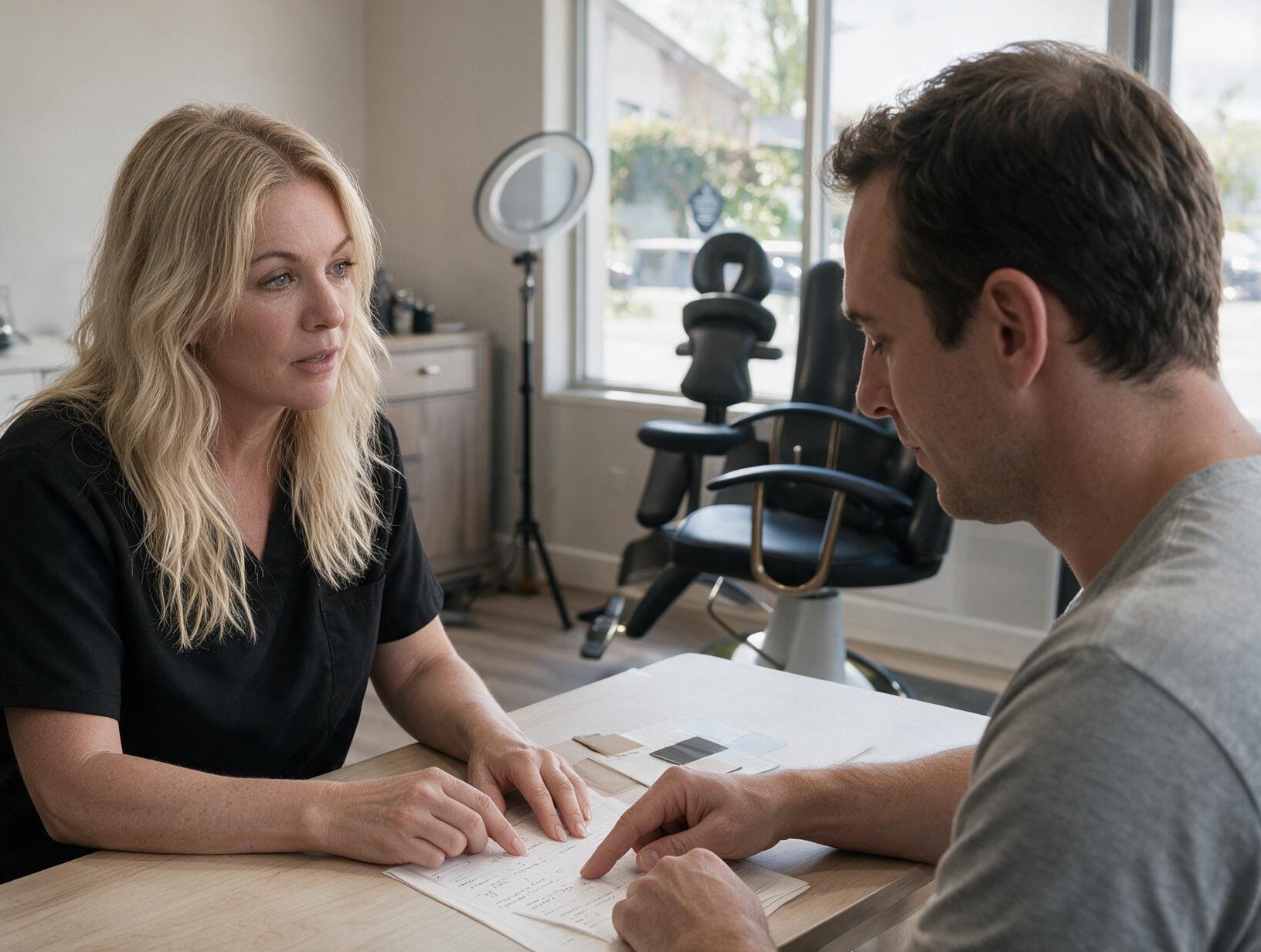
A thorough consultation should take place before treatment. I want to understand your hair loss pattern, current hairstyle, skin type, lifestyle, medical history and expectations. I also ask about allergies, because you should disclose any known allergy before pigment is applied. Clients prone to forming keloids should avoid SMP unless they have received appropriate professional guidance.
Before starting, I mark the proposed treatment area and discuss the hairline with you. We look at the shape from different angles, including how it relates to your temples and remaining hair. If you have thinning rather than a completely shaved scalp, the design may involve placing impressions between existing hairs to reduce scalp show-through rather than creating a new frontal border.
We also discuss density. Building the appearance gradually is generally more controllable than trying to create maximum density immediately. I use numbing medicine to help manage discomfort, and the procedure uses fine needles to deposit cosmetic-grade pigment into the superficial scalp layers.
If female pattern hair loss is suspected, it is sensible to arrange medical assessment and blood tests to rule out other diseases, metabolic conditions or hormone imbalances that can cause a similar pattern. SMP is cosmetic. It does not diagnose, prevent or treat an underlying condition.
How can I reduce the risk of a bad result?
These are the checks I suggest making before you commit:
- Review several healed examples, paying particular attention to the front edge and temples.
- Ask what pigment is used and how the color is chosen for your hair and skin.
- Confirm that the practitioner has specific SMP training and relevant licensing.
- Ask how density will be built and what a realistic result will look like in your case.
- Discuss allergies and any medical or scalp conditions before treatment.
- Make sure you are comfortable with the proposed hairline before pigment is implanted.
A patch test on an inconspicuous area may also be discussed to check for an ink allergy before full treatment. It is important to understand that no cosmetic procedure is risk-free. Choosing an experienced provider and reviewing their work can reduce, but cannot eliminate, the possibility of an allergic reaction, infection, poor color choice or an unnatural appearance.
Be cautious about promises of an instant, perfect result. SMP is intended to be long-lasting, but it gradually fades as the skin renews itself. A touch-up may eventually be appropriate, and removal is possible with laser treatment if necessary. Removal can be more complicated when the original pigment was placed incorrectly.
What aftercare helps the hairline heal well?
Before your appointment, wash your hair and scalp as advised so the area is clean. After treatment, keep the scalp dry during the initial healing period. A shower cap can help while bathing. Avoid heavy exercise, steam rooms and hot showers that make you sweat, and protect the scalp from direct sun for several days.
Follow the specific instructions given at your consultation. General informational guidance may include avoiding hair washing, strenuous activity and saunas during the healing period, and applying a small amount of a petrolatum-based moisturizer, such as Aquaphor or Vaseline, twice daily to help prevent scab formation. Do not pick or scratch flaking skin.
Once healed, long-term sun protection helps preserve the appearance of the pigment. A broad-spectrum sunscreen on the scalp is useful, especially if the area is shaved or closely cropped. Pigment may fade sooner with frequent sun exposure, oily skin, a fast cellular metabolism or certain medications, so maintenance varies between individuals.
Contact your practitioner if you notice increasing redness, warmth, swelling, unusual discomfort or another healing concern that was not discussed with you. If you are considering SMP in San Jose, you can find Micropigment Studio contact and location information before arranging a consultation.
Booking a consultation is a simple way to discuss your hairline, expectations and suitability without pressure.
Frequently asked questions
Will a hairline tattoo look obvious from close up?
A well-planned SMP result is intended to resemble closely cropped follicle shadows, but it is still a cosmetic tattoo and not real hair. Close inspection may reveal pigment impressions. The result is usually less noticeable when the color, spacing, density and frontal edge are planned around your existing hair and natural facial proportions.
Can SMP make my hairline look younger?
SMP can create the appearance of a fuller or more defined hairline, but it should not be used to recreate an unrealistic teenage hairline. A suitable design considers your age, facial structure, current hair loss and likely future pattern. The aim is a believable appearance, not simply moving the hairline as far forward as possible.
Can I have SMP if I still have hair at the front?
Yes, SMP can be placed between existing hairs to reduce the contrast between the scalp and hair. This is often approached as a density treatment rather than a completely new hairline. The design needs to blend with your present growth pattern, and future hair loss should be discussed before deciding where pigment belongs.
Does a receding hairline always need to be filled in?
No. Some clients prefer a softened, mature hairline that follows their natural recession rather than filling the entire area forward. The right choice depends on your goals, hairstyle, existing density and willingness to maintain the look if hair loss progresses. A consultation helps compare a conservative design with a fuller option.
Can I shave my head after getting SMP?
Many people choose a shaved or closely cropped style after SMP, while others receive treatment between longer existing hairs. The best hairstyle depends on the type and extent of hair loss, the design and your personal preference. Your practitioner should explain how the result will look with your usual haircut before treatment.
What happens if the pigment color is wrong?
Incorrect color can make a result appear too dark, cool, warm or disconnected from the hair. It may soften as it heals, but color concerns should be discussed promptly with the practitioner. Do not add more pigment simply to cover a problem before the skin has healed and the result has been properly assessed.
Is hairline tattoo removal possible?
SMP can be removed with laser treatment, although removal may require professional assessment and more than one treatment. The process can be more difficult when pigment was implanted too deeply, spread or changed color. This is one reason I encourage prospective clients to prioritise careful design and experienced application before proceeding.
