
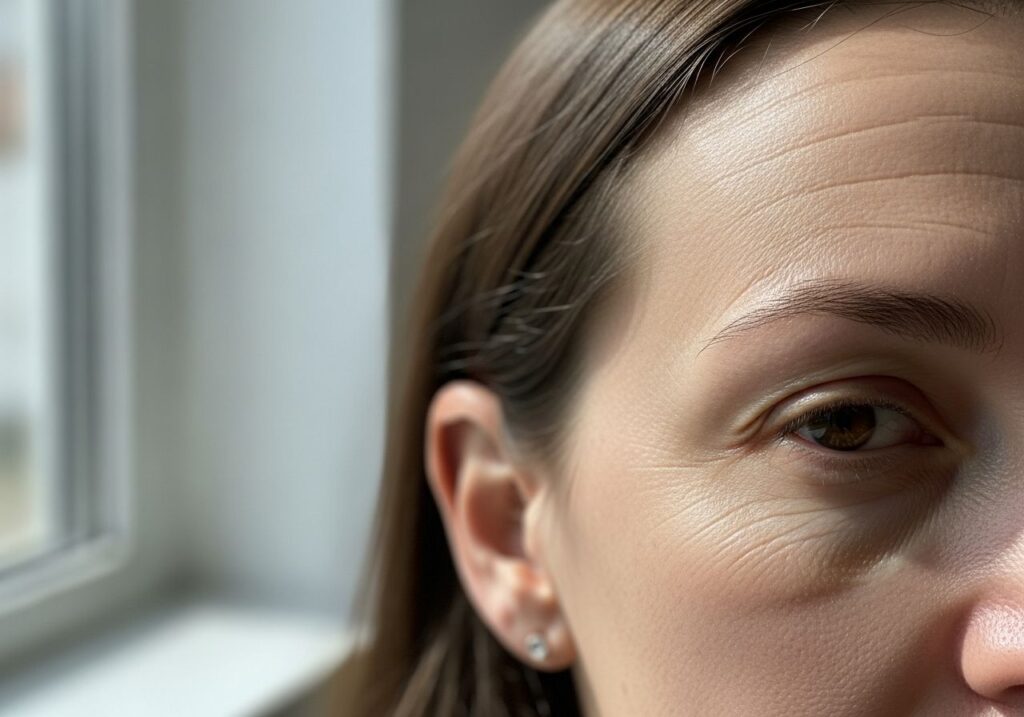
You’ve watched your parting widen in the mirror and wondered if there’s anything that actually works, short of surgery or a lifetime of concealer powder. Diffuse thinning behaves differently to male balding, and it needs a different solution. Here are five things that determine whether SMP gives you back the density you’ve lost.
Scalp micropigmentation for women’s hair loss works by placing thousands of tiny pigment dots between your existing hairs, closing the gap between scalp colour and hair colour so the thinning looks far less visible. It’s not hair restoration and it doesn’t regrow anything. What it does is rebuild the illusion of thickness across the areas where your own hair has thinned but hasn’t disappeared entirely.
1. Your hair loss pattern decides where the pigment goes
Female pattern hair loss usually spreads diffusely across the crown and mid-scalp, and it almost always leaves the frontal hairline intact. That’s a completely different picture to male pattern baldness, which recedes from the temples and crown in a fairly predictable sequence. Around one in three women experience this type of gradual, all-over thinning, and it rarely progresses to full baldness.
Because of that, the pigment work for women is spread through the existing hair rather than concentrated at a hairline. A practitioner builds density where your parting shows scalp, where light catches through thinning patches, and along the sides where hair has become fine and sparse. The strategy follows your specific loss pattern, not a template.
2. You still have hair, so the technique has to work around it
Most women coming in for SMP still have a reasonable amount of hair, just less of it and finer than it used to be. That changes the whole approach compared with a fully shaved male scalp. Pigment has to be deposited between strands in a shallower, more scattered dot pattern, matching your natural hair colour and skin tone so it reads as scalp shadow rather than ink.
Dot density typically starts around 40 dots per square centimetre in the first session and builds to 80 or more by the final one, layered carefully so it doesn’t overwhelm the hair sitting on top of it. Get this stage wrong and the result looks flat or artificial. Get it right and it disappears into your natural hair when you run your fingers through it.
3. Alopecia and scarring change the plan entirely
Not every woman coming in has straightforward diffuse thinning. Alopecia areata, alopecia totalis, and scarring alopecia from previous surgery, trauma, or tight hairstyles all present differently, and each needs its own pigment strategy. Totally bald patches from alopecia totalis are treated more like a male scalp, with fuller stippling to simulate a shaved look, while patchy alopecia areata needs pigment blended carefully at the edges of each patch.
Scarring alopecia tends to fade faster than pattern hair loss because scar tissue holds pigment less predictably than healthy dermis. A 2025 case series found scarring alopecia results faded more noticeably over six months than androgenetic cases, which is worth knowing before you commit to a treatment plan.
4. Postpartum and stress-related thinning needs patience, not urgency
Hormonal shifts after pregnancy, chronic stress, and conditions like telogen effluvium can cause sudden, dramatic shedding that sometimes reverses on its own within six to twelve months. Booking SMP too early, while your hair loss is still active or potentially temporary, risks pigmenting a scalp pattern that changes again once your hair recovers. A practitioner worth trusting will ask about the timeline and cause of your thinning before booking your first session.
Once loss has stabilised, SMP becomes a genuinely good option for camouflaging the residual thinning that doesn’t fully resolve, particularly through the crown and parting where postpartum shedding tends to show most.
5. Skin conditions and scalp health rule some women out
Active scalp acne, a psoriasis flare-up, eczema, or a tendency toward keloid scarring are all reasons to pause rather than book. Pigment placed into inflamed or compromised skin heals unpredictably and can trigger a worse flare. Most practitioners will ask you to get an active skin condition under control first.
Skin type also affects how long your result lasts. Oilier, younger skin tends to fade pigment faster through quicker cell turnover, while drier, more mature skin generally holds colour longer. That’s useful to know when you’re weighing up realistic longevity rather than best-case marketing claims.
Healed results typically last four to eight years before a touch-up is needed, and most women return every four to six years to refresh density as pigment fades and natural hair colour changes with age. Sessions usually run to two or three appointments spaced several weeks apart, each lasting one to three hours depending on the area covered. Full healing takes around a month, with the first few days requiring no washing, sweating, or sun exposure on the treated scalp.
Frequently Asked Questions
Does scalp micropigmentation work for women with thinning hair rather than total baldness?
Yes. SMP for thinning hair in women works by depositing pigment dots between existing strands, reducing the visible contrast between scalp and hair. It’s specifically suited to diffuse thinning because it doesn’t require a shaved head or a hard hairline to look natural.
How is SMP for women different from SMP for men?
Male SMP often recreates a defined hairline and simulates a buzzed look on a fully bald scalp. Female SMP blends pigment through remaining hair to build density across thinning areas, since most women retain hair and keep their natural hairline throughout treatment.
How many sessions does scalp micropigmentation for women’s hair loss take?
Most women need two to three sessions, spaced several weeks apart, with each session lasting one to three hours depending on the area treated. Pigment density builds gradually across sessions to avoid an unnatural or overly dark result.
How long does SMP last before it needs a touch-up?
Results typically last four to eight years before noticeable fading occurs, with most women returning for a touch-up every four to six years. Sun exposure, skin type, and cell turnover rate all affect how quickly the pigment softens over time.
Who isn’t a good candidate for scalp micropigmentation?
Women with active scalp acne, a current psoriasis or eczema flare-up, or keloid-prone skin should wait until the condition settles. Anyone with recent or still-progressing hair loss, such as postpartum shedding, should also wait until the pattern stabilises before booking.
Ready to talk it through?
Micropigment Studio in San Jose offers a personal consultation to answer your questions and recommend the right approach for you. Get in touch with Micropigment Studio to book your consultation.
