
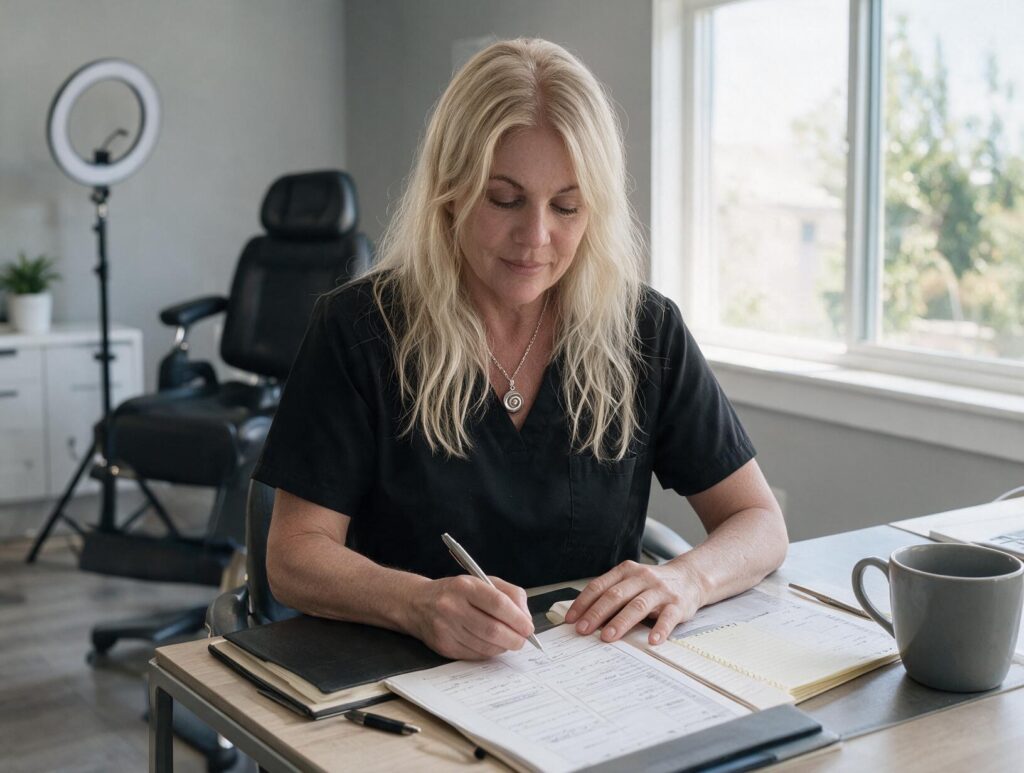
Yes. Scalp micropigmentation can work for women with blonde, light brown, white or gray hair. I place carefully matched cosmetic pigment between existing hairs to reduce the contrast between scalp and hair, creating the appearance of greater density. It does not grow hair, but it can make visible thinning less noticeable.
How does female scalp micropigmentation work on light hair?
When blonde or gray hair is thinning, the scalp may show through because of the contrast between the hair and the skin beneath it. Female scalp micropigmentation addresses that contrast. I place tiny deposits of permanent cosmetic pigment between existing hairs, so the scalp appears less exposed and the hair can read as fuller.
The pigment is selected to harmonise with your current hair follicle color, not simply copied from a photograph or matched to a temporary hair dye. With blonde hair, that may mean creating a soft, understated tone rather than a dark dot. The goal is a natural shadow effect, sometimes described as a shadow root, not a painted scalp.
This treatment does not grow hair, alter natural growth or repair a hair follicle. It is a visual density treatment. If you still have hair between the thinning areas, I can work around it and place pigment beneath and between the existing strands.
You can read my scalp micropigmentation treatment overview for a broader explanation of the process and the different ways SMP can be used.
What kind of result can blonde-haired women expect?
The result depends on your pattern of thinning, hair color, scalp tone, skin texture and how much scalp is visible. Female pattern hair loss often causes diffuse thinning across the top of the head while the frontal hairline is relatively maintained. That pattern can be suitable for density work between the hairs, especially around a parting or crown.
I set expectations carefully during consultation. Some scalp showing through the hair is normal. SMP is not intended to create the appearance of a completely painted, solid or artificially dense scalp. A successful result should soften the visible contrast when you look in ordinary lighting and from a normal conversational distance.
On dark blondes, brunettes and gray blending cases, reducing scalp contrast can change how the whole head of hair reads. With lighter blonde or white hair, the effect may be more subtle. Subtle does not mean ineffective. It means the color and placement need to be restrained enough to remain believable.
Women often continue wearing their hair long, parting it differently, putting it up or using extensions after treatment. SMP does not require a shaved head for female density work, although the treatment plan depends on how much hair is present and where the scalp is visible.
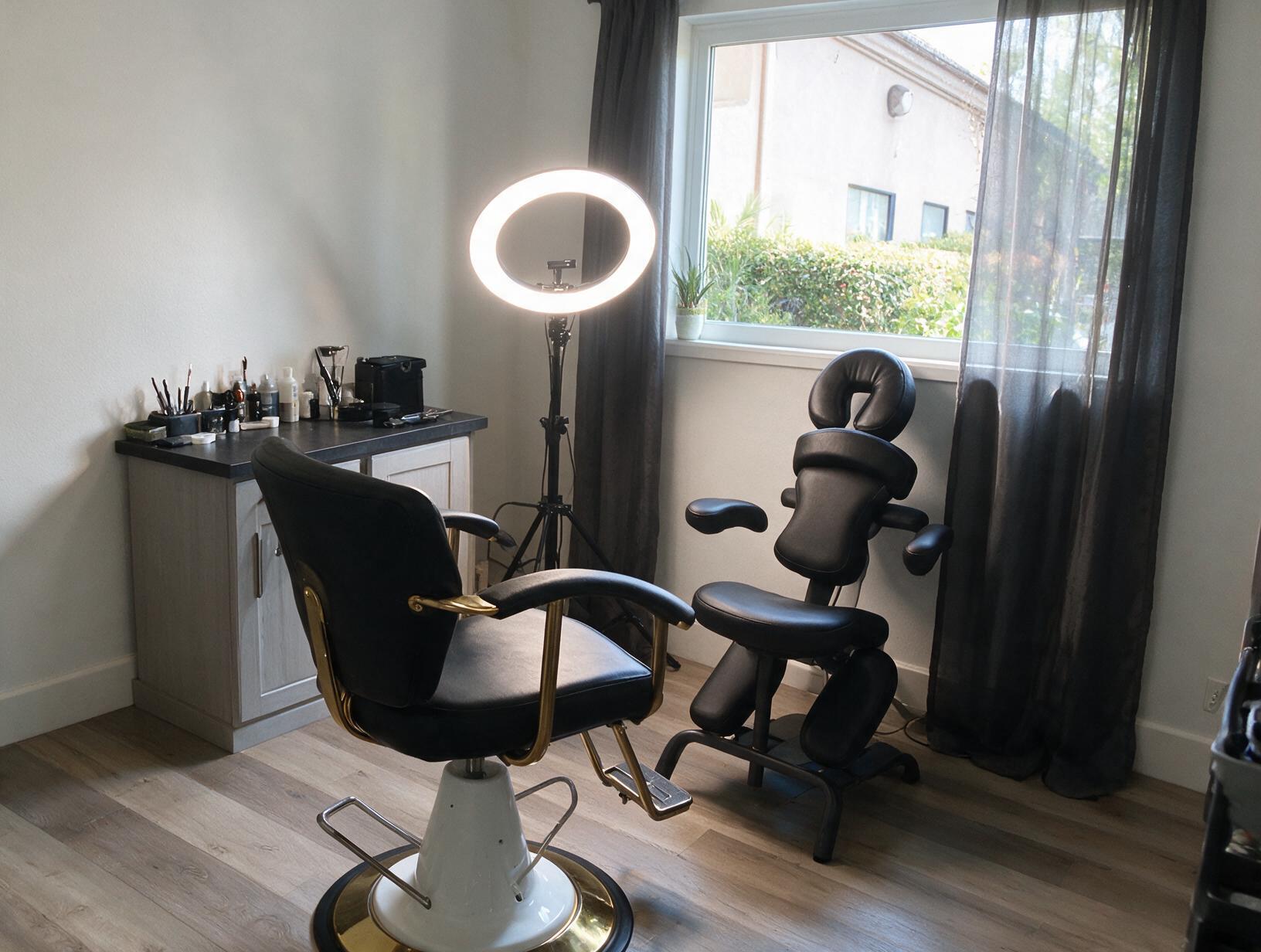
How do I plan SMP for blonde hair?
We begin with a consultation covering your hair loss pattern, scalp, skin type, lifestyle, medical history and expectations. If your thinning could be female pattern hair loss, it is sensible to discuss medical assessment with a qualified healthcare professional first. Blood tests may be appropriate to exclude other diseases, metabolic conditions or hormone imbalances that can cause similar hair loss.
I assess the scalp in suitable lighting and look at the color of your follicles, the direction of your hair, the areas of show-through and the way you normally wear your hair. We then discuss the placement, density and color plan before treatment begins.
Before each session, wash your hair and scalp. I mark the treatment areas, agree the design with you and apply numbing medicine. SMP uses thin needles to deposit pigment into the epidermal and upper dermal layers. The placement must be controlled because pigment that is implanted too deeply can spread and look blurred, while pigment that is placed too shallowly may fade more quickly.
A full course commonly involves several sessions, with the plan assessed at consultation, with the exact plan varying according to the area and your response. I prefer to build density carefully rather than make the first application too strong. Healed work is more useful than fresh photographs when you are assessing a practitioner, so ask to see examples of healed hairline and density results on comparable hair colors.
Is SMP painful, and what is the aftercare?
Discomfort is usually limited, and I use numbing to make the procedure more comfortable. Everyone’s sensitivity is different, so I explain what you may feel before we start and work at a controlled pace.
Immediately afterwards, the pigment can look darker or more intense than the healed result. Light flaking or scabbing may occur. Do not pick or scratch the area. For the healing period, keep the scalp dry, use a shower cap when bathing, avoid washing the treated area, heavy exercise, steam rooms and hot showers that cause sweating. Avoid direct sun exposure for several days.
Follow the specific aftercare instructions given at your consultation. General aftercare guidance may include applying a thin layer of a petrolatum-based moisturizer such as Aquaphor or Vaseline twice daily to help prevent scab formation. Once healed, broad-spectrum sunscreen on the scalp helps protect the pigment over time.
Contact your practitioner if you notice increasing redness, swelling, warmth, unusual discomfort or any healing concern beyond what was discussed. Also disclose allergies before treatment. A small patch test on an inconspicuous area may be discussed before the full procedure.
How should women choose an SMP practitioner?
For blonde hair, color judgement and restraint matter as much as needle technique. Look for a licensed and experienced cosmetic or body artist who can explain the pigments used, show healed work and discuss how the result may soften over time. A current bloodborne pathogens certificate and relevant local licensing are also important questions to ask.
Pay particular attention to hairline work, even if you are seeking density rather than a new hairline. An unnatural hairline can affect the whole result. I recommend asking how the practitioner avoids a solid or helmet-like appearance and what happens if your hair color, density or hairstyle changes later.
I am Janette Archer, and I was certified in SMP through Scalp MicroNation and ScalpCo Academy, and I continue my training each year. I provide female SMP at Micropigment Studio in San Jose, California. You can find contact and location information for Micropigment Studio before arranging a consultation.
SMP is intended to be a permanent cosmetic treatment, although it gradually fades and may need refreshing. Laser removal is possible later, but removal can be more complicated when the original work was poorly placed or the color was not chosen appropriately. That is why a careful consultation and conservative plan are worth taking seriously.
If you would like to discuss whether this approach suits your blonde or light hair, you can book a consultation.
Frequently asked questions
Will SMP make blonde hair look darker?
It should not be used to turn blonde hair into dark hair. The pigment is chosen to harmonize with your current follicle color and placed lightly between existing hairs. The intended effect is reduced scalp contrast and a soft shadow, rather than dark, obvious dots or a solid block of color.
Can I keep my hair long after female SMP?
Yes, female density work can be performed between existing hairs, so shaving is not automatically required. Many women continue wearing long hair, changing their part or putting their hair up. Your hairstyle, density and the areas where scalp shows will influence the placement plan discussed during consultation.
Does SMP work for white or gray hair?
It can be considered for white or gray hair when the pigment is matched carefully to the current follicle tone. The finished effect may be especially subtle, because the aim is to soften the contrast between hair and scalp. Gray blending, skin tone and sun exposure all influence the plan.
Can SMP treat hair loss caused by an illness?
SMP may camouflage the appearance of thinning, scarring or some forms of alopecia, but it does not diagnose, prevent or treat an underlying disease. If your hair loss is new, rapidly changing or unexplained, discuss medical assessment first. Treatment planning should follow a clear understanding of the cause.
Can blonde women use hair dye after SMP?
Hair color changes can alter the relationship between your hair and the implanted pigment, so discuss planned dyeing during consultation. You should also follow the healing restrictions before applying color. The timing varies, and your practitioner can tell you when the scalp is sufficiently healed for your usual salon service.
How long does SMP last on blonde hair?
SMP does not wash out with shampoo, but it gradually softens as skin naturally exfoliates. Longevity varies with skin type, sun exposure, lifestyle, medications and aftercare. Permanent cosmetic pigments commonly last several years before a touch-up may be considered, rather than remaining unchanged indefinitely.
Can SMP be removed if I change my mind?
Laser treatment can remove SMP, but removal is not an effortless reversal and may require careful assessment. The risk of complications is higher when pigment was placed incorrectly or has spread. This is why I recommend reviewing healed work, discussing pigments and taking time with the design before treatment.
