
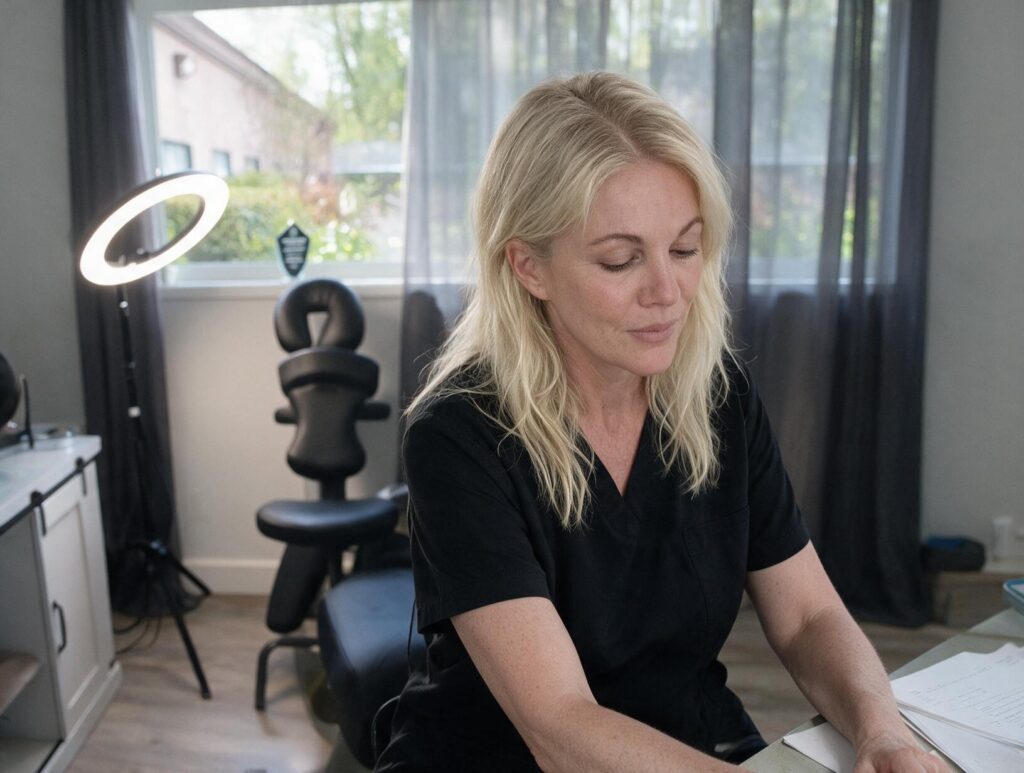
Scalp micropigmentation is not expected to fade to a blue or gray color when the pigment, placement and density are chosen carefully. An unexpectedly cool tone can result from unsuitable pigment, excessive depth, over-saturation or the way pigment has healed. I assess your hair, scalp and desired finish before treatment to reduce that risk.
Why can SMP look blue or gray?
When someone asks whether a scalp micropigmentation treatment will turn blue or gray, they are usually concerned about the pigment changing as it heals. In my experience, an unnatural cool tone is more often connected with the original color choice, placement depth or excessive saturation than with ordinary fading alone.
SMP uses tiny dots of cosmetic pigment to create the appearance of follicle shadow. The pigment is selected to relate to your current hair color, not simply chosen from the darkest available shade. A color that is too dark or too cool can look harsh against the scalp, particularly around a hairline or in areas where the natural hair is gray, blonde or otherwise light.
Placement matters as well. SMP is intended for the epidermal and upper dermal layers. If pigment is placed too deeply, it can spread and lose the clean, separate appearance of follicle impressions. That can make the result look blurred or heavier, and the tone may appear different from what was expected.
There is also a difference between a temporary healing appearance and a lasting color change. Freshly treated skin commonly looks darker or more intense for a short period before it softens. Flaking and light scabbing can also make the scalp look uneven while it heals. I assess the settled result rather than judging the treatment during those early changes.
Does SMP naturally fade to gray?
SMP is a long-lasting cosmetic tattoo treatment, but it does gradually soften as the skin renews itself. It does not wash out with shampoo. Normal fading should generally mean that the impressions become lighter and less defined over time, not that they suddenly change into a blue or gray color.
The speed and pattern of fading vary. Sun exposure, skin characteristics, skincare habits and the area treated can all affect how the pigment holds. Mature, dry skin with good sun protection may retain the result differently from oily skin or skin exposed to frequent sunlight. Scalp scars can also behave differently from unaffected skin.
Your hair color can change while the pigment remains in the scalp. For example, if your hair becomes more gray, an older pigment plan may create a different level of contrast than it did originally. That does not necessarily mean the pigment has turned blue. It may mean the balance between hair, scalp and pigment needs to be reviewed.
My aim is not to make the scalp look painted. A believable result allows some scalp to show through, particularly where hair is thinning. SMP creates a visual impression of density or a shaved head. It does not grow hair, change natural hair growth or repair the underlying cause of hair loss.
How do I prevent an unnatural pigment color?
I begin with a consultation rather than treating every scalp in the same way. We discuss your hair color, skin tone, hair-loss pattern, lifestyle and the way you normally wear your hair. We also talk about your expectations, because a natural result should be planned around your current appearance and how it may change.
For a fully shaved look, the hairline needs particular care. I consider facial structure and age rather than drawing an artificially straight line. For thinning hair or female density work, I may work between existing hairs to reduce visible scalp show-through. The design, pigment selection and density need to suit the amount of natural hair you still have.
I build density carefully rather than trying to create a heavy result immediately. Layering allows the scalp to settle between appointments and gives me the opportunity to assess how the pigment has healed before adding more. This is one reason I do not make a color decision based only on how the skin looks directly after treatment.
Before treatment, the scalp and hair should be clean. I mark the areas, agree the proposed hairline or density plan, match the pigment to your current follicle color and use numbing medicine. I also ask you to disclose allergies and relevant health information. We can discuss whether a small patch test is appropriate for you.
You can read my scalp micropigmentation treatment overview for more about the process and the different ways I approach shaved, male density and female work.
What should I look for when choosing an SMP practitioner?
Look closely at healed work, especially hairlines. Fresh photographs can show a result before the skin has settled, so I recommend asking to see examples that demonstrate how the pigment looks after healing. Pay attention to whether the impressions remain soft and separate, whether the hairline suits the person’s face, and whether the density looks believable.
Ask which pigments and technique the practitioner uses, how they plan for your hair color, and what happens if your hair becomes lighter or greyer later. A thorough consultation should cover skin type, lifestyle, medical history and expectations. You should feel able to ask how the practitioner manages hygiene, allergies and aftercare.
Qualifications and local requirements also matter. A qualified practitioner should be a licensed cosmetic or body artist, ideally hold a county body artist licence and current bloodborne pathogens certification. Experience with different scalp conditions is important, because unaffected skin, scars and areas affected by hair-loss conditions may not heal in exactly the same way.
I am Janette Archer, and I was certified in SMP by Scalp MicroNation in 2021 and trained again by ScalpCo Academy in 2022. I continue advanced training and education. I first received certification in micropigmentation (permanent cosmetics) in 1989.
How should I care for the scalp after treatment?
Aftercare supports a clean, even healing process. I give individual instructions, but general guidance includes keeping the scalp dry during the initial healing period. Use a shower cap when bathing, and avoid heavy exercise, steam rooms and hot showers that make you sweat. Avoid direct sun exposure on the scalp for several days.
Do not wash, scratch or pick at the treated area until I advise that it is fine to do so. A petrolatum-based moisturizer such as Aquaphor or Vaseline may be recommended twice daily to help prevent scab formation. Once the area has healed, broad-spectrum sunscreen on the scalp helps protect the pigment over the longer term.
Contact me if you notice unusual warmth, spreading redness, swelling, intense itching, unexpected discomfort or any healing change that goes beyond what we discussed. If the color looks unexpectedly blue, green or very blurred after healing, it needs professional assessment rather than an immediate attempt to correct it.
I welcome clients at Micropigment Studio in San Jose, California. You can use the contact and location information to ask about a consultation.
If you would like to understand whether your color, hair pattern and expectations are suitable, you are welcome to book a consultation with me.
Frequently asked questions
Can SMP be used with salt-and-pepper hair?
Yes, it can be adapted for salt-and-pepper hair, but the plan should follow the overall hair color and contrast rather than only the darkest strands. The pigment should remain subtle enough to blend with lighter hair. I assess your current pattern and discuss how future graying may affect the balance.
Can SMP match completely white hair?
SMP cannot create white follicles or turn pigment white. It may reduce the contrast between a pale scalp and white or silver hair when the density and color are kept restrained. Whether the visual improvement is worthwhile depends on your scalp tone, hair pattern and expectations, which I assess during consultation.
Can pigment be corrected if it has healed too dark?
Correction depends on the color, depth, density and condition of the skin. It is not sensible to add more pigment before understanding the problem, because extra saturation may make the result heavier. I first assess the healed work and then discuss appropriate options, which may include correction or removal.
Can SMP be removed if the color becomes unsuitable?
Scalp micropigmentation can be removed later with laser treatment, although removal is not an effortless reset. The original pigment, depth and application quality affect the process and the risk of complications. This is why I encourage careful planning, realistic expectations and a qualified, experienced practitioner from the beginning.
Will an oily scalp make SMP turn blue?
Oily skin can affect how quickly pigment settles and fades, but oil alone does not mean SMP will turn blue. Color choice, placement depth, saturation and healing all matter. I consider your skin and lifestyle during planning, then provide aftercare guidance intended to support an even result.
Can I have SMP if I have a scalp scar?
SMP may camouflage some scalp scars, but scar tissue can heal and retain pigment differently from unaffected skin. I need to assess the scar’s maturity, texture, color and location before advising you. The result should be discussed as camouflage, not as a treatment that repairs the scar or restores hair growth.
