
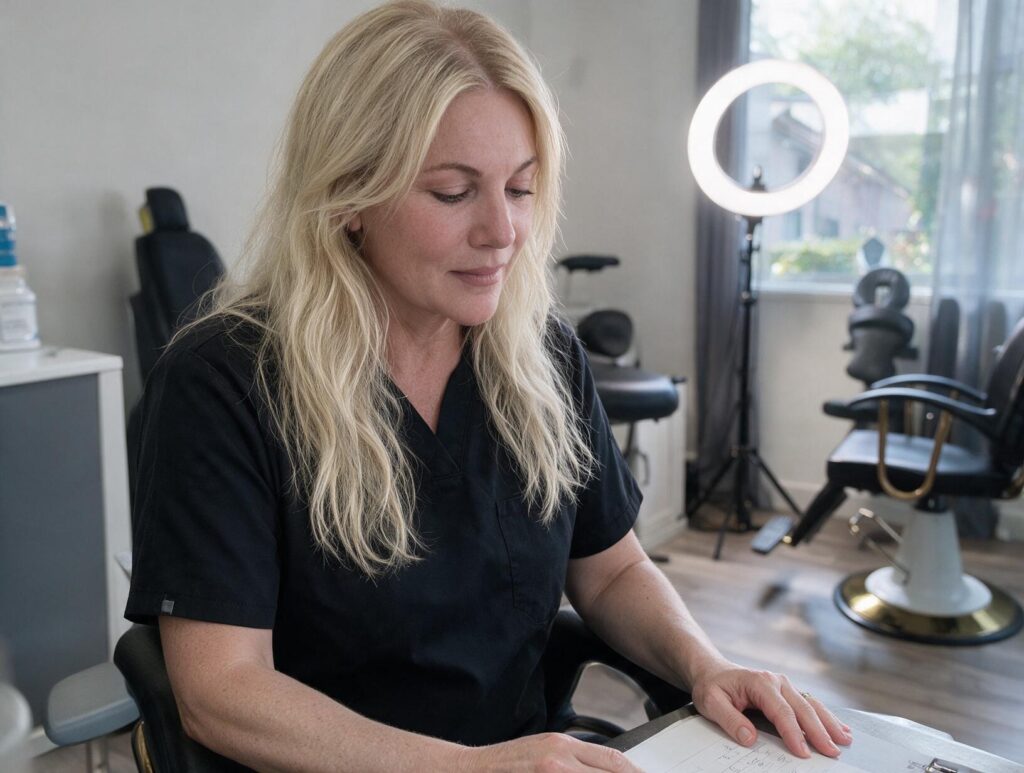
Scalp micropigmentation can make a woman’s hairline look fuller and more defined, but it does not regrow hair or rebuild follicles. I place carefully matched pigment among existing hairs or in areas of visible scalp to reduce contrast. The result is a cosmetic illusion of density, planned around your features and hair pattern.
What can scalp micropigmentation do for a woman’s hairline?
When a woman asks me about a changing hairline, I first separate the appearance of the hairline from the biology beneath it. SMP cannot restart hair growth, alter the growth cycle or repair a damaged follicle. It is a non-surgical cosmetic tattoo treatment that places tiny pigment impressions into the scalp.
Those impressions reduce the difference between the scalp and the surrounding hair. That can make sparse areas look less obvious, including the temples, frontal hairline, widening part or crown. In women, treatment is often performed between existing hairs rather than creating the closely shaved look commonly associated with men.
The phrase “rebuild” can therefore be misleading. I can help create the appearance of a softer, fuller or more even hairline, but I cannot restore the natural hairline as a medical treatment. The finished effect depends on how much hair remains, the cause and pattern of loss, your hair color, skin tone and the condition of the scalp.
Some women have a naturally high or irregular hairline, while others notice thinning after hormonal changes, illness, alopecia, chemotherapy or a procedure. These situations need different planning. If loss is new, rapidly changing or unexplained, I recommend discussing the cause with a qualified medical professional before choosing a cosmetic treatment.
How is female hairline SMP different from a shaved-head treatment?
For female density work, my aim is usually not to draw a hard, solid border. I work with the hair you have and place pigment in a controlled pattern that supports the existing strands. This can help reduce scalp show-through while allowing you to keep your hairstyle.
A natural hairline is not a perfectly straight line. During consultation, I assess your facial structure, age, current hairline, density and the way your hair is styled. We discuss where a fuller appearance would look believable and how soft the front edge should be. If someone is fully bald, hairline planning also needs to take facial proportions and age into account.
The pigment is selected to harmonise with your current hair follicle color. Placement must remain delicate enough to avoid an artificial, painted or helmet-like appearance. This is one reason I encourage prospective clients to examine a practitioner’s healed hairline work, not only freshly completed photographs.
Women with black, blonde, brown or white hair can be considered, although the color and density plan will vary. Skin tone, texture, oiliness, sun exposure and the pattern of thinning all affect how the result heals and ages. A consultation is the right place to decide whether the hairline, the part, the crown or a combination needs attention.
What should happen before scalp micropigmentation for women?
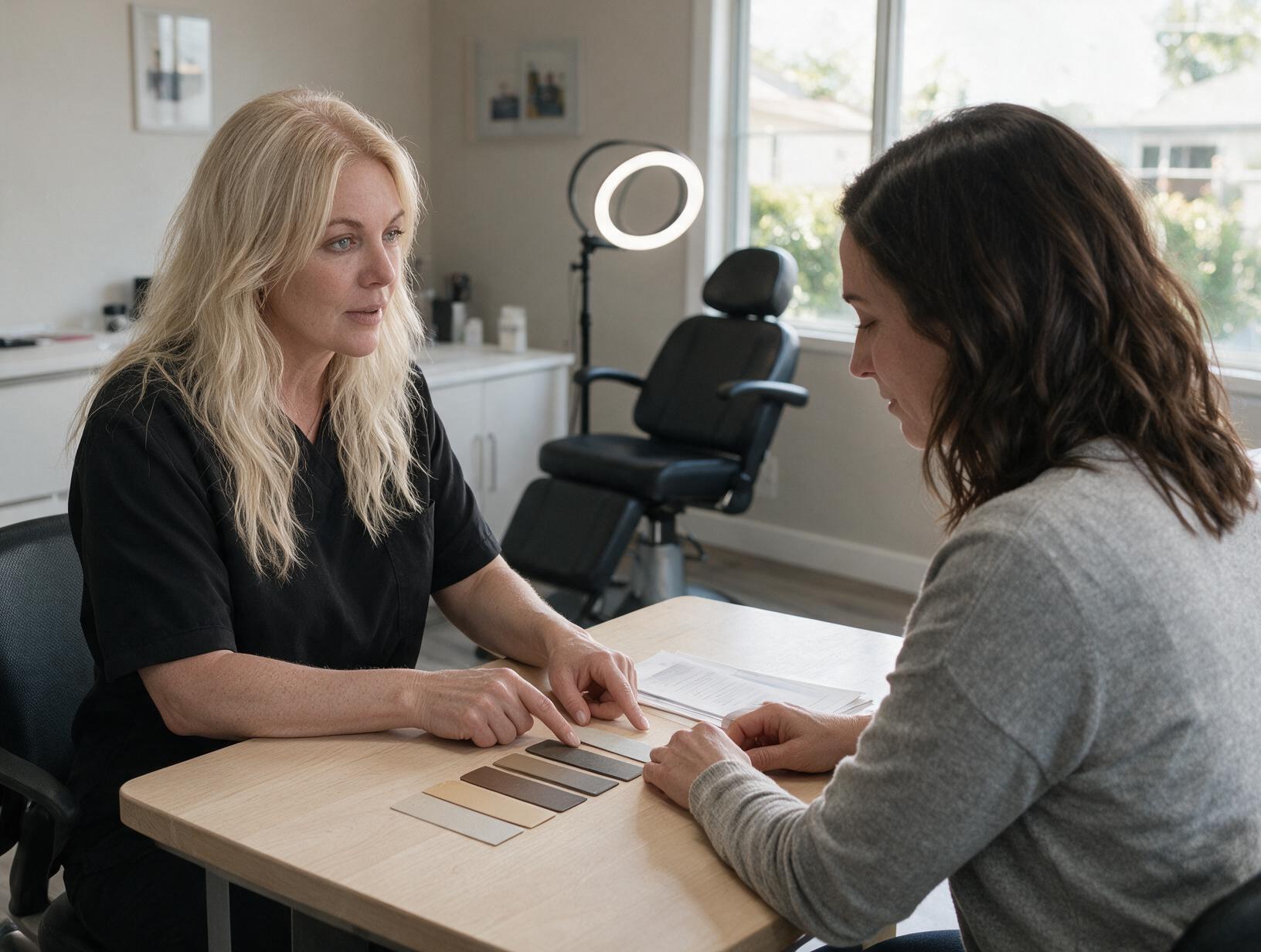
A thorough consultation should cover your medical history, allergies, skin type, lifestyle, hair loss pattern and expectations. I also want to understand whether your priority is a more defined front edge, less visible scalp between hairs, camouflage of a scar or an overall density effect.
Before treating suspected female pattern hair loss, it is sensible to arrange appropriate blood tests through a medical professional to exclude diseases, metabolic conditions or hormone imbalances that can create a similar pattern. SMP can disguise visible thinning, but it does not diagnose, prevent or treat the underlying cause.
Before an appointment, wash your hair and scalp so the treatment area is clean. At the appointment, I mark the areas, discuss and agree the proposed hairline, match the pigment and apply numbing medicine. A small patch test in an inconspicuous area may also be discussed to help identify an ink sensitivity before full treatment. Please disclose every known allergy.
I recommend choosing a licensed, experienced cosmetic or body artist who follows sanitary procedures, carries appropriate bloodborne pathogens training and can show healed examples. Hairline work deserves particular attention because poor placement, color selection or depth can leave an unnatural result and may make later correction or laser removal more difficult.
You can read my scalp micropigmentation treatment overview for a broader explanation of the procedure. I am Janette Archer, and I have worked in permanent cosmetics since earning my micropigmentation certification in 1989. I completed SMP training with Scalp MicroNation in 2021 and further SMP training with ScalpCo Academy in 2022, with continuing education each year.
What is recovery like after female hairline SMP?
Some temporary darkness or intensity is expected at first. Flaking or light scabbing can occur as the area heals, so do not pick or scratch it. For the early healing period, keep the scalp dry, use a shower cap when bathing and avoid washing the treated area, heavy exercise, steam rooms and hot showers that cause sweating. Avoid direct sun on the scalp for several days.
Follow the aftercare instructions given at consultation. Informationally, many SMP aftercare plans include a small amount of petrolatum-based moisturizer, such as Aquaphor or Vaseline, applied twice daily to help prevent scab formation. Long term, broad-spectrum sunscreen helps protect the pigment from sun-related fading.
SMP is intended to be long lasting, but it is not unchanged forever. Natural exfoliation, sun exposure, skin type, oiliness, metabolism, medication and hair loss changes can affect fading. It does not wash out with shampoo. Touch-ups may eventually be appropriate, and laser treatment can remove SMP if that is ever needed.
Contact your practitioner if you notice signs of infection such as increasing redness, swelling or warmth, unusual discomfort, excessive swelling or redness, or any healing concern beyond what was discussed. These are reasons to seek advice rather than trying to manage the issue by altering aftercare yourself.
How do I decide whether this is right for me?
SMP may suit you if your main concern is visible scalp and you want a cosmetic way to make a hairline, part or thinning area look less prominent without surgery. It may also help camouflage some scars, alopecia-related patches and areas affected by trauma or previous procedures.
It may not be the right first step if your loss is unexplained, actively changing or associated with a scalp condition that has not been assessed. People prone to forming keloids should avoid SMP. I also want clients to understand that some scalp showing through the hair is a normal, realistic outcome. The goal is not a fully painted scalp.
At Micropigment Studio in San Jose, I offer female SMP as a priority service. I will talk through what can reasonably be improved, where the pigment would be placed and whether your expectations match the nature of the treatment. You can read my guide to scalp micropigmentation for receding hairlines if your main concern is recession at the temples or front edge.
If you would like to discuss your pattern of thinning and the most natural approach, you can contact Micropigment Studio to arrange a consultation.
Frequently asked questions
Can women keep their hair long after hairline SMP?
Yes. Female density treatment is commonly planned around existing hair, so keeping long hair is possible. The pigment is placed between or beneath visible strands to reduce scalp contrast, rather than requiring a shaved style. Your hairstyle, remaining density and the exact area being treated will influence the design.
Will hairline SMP hide a widening part as well?
It can sometimes make a widening part look less noticeable by reducing the contrast between the scalp and surrounding hair. The same principle may help at the crown or temples. The result depends on the amount of existing hair and whether the underlying cause of thinning has been assessed and stabilised.
Does female SMP damage existing hair follicles?
SMP is intended to place cosmetic pigment in the superficial scalp layers and does not change the natural hair-growth cycle. It is not designed to damage existing follicles. As with any cosmetic tattoo procedure, appropriate licensing, hygiene, correct technique and disclosure of allergies are important parts of reducing avoidable risk.
Can SMP cover a scar along a woman’s hairline?
SMP may camouflage some scars from trauma, surgery or hair procedures by reducing the color contrast between the scarred scalp and nearby hair. Scar tissue can heal differently from normal scalp, so suitability, pigment retention and the design should be assessed in person before treatment is planned.
How long does a female hairline SMP appointment take?
The time varies according to the size of the area, the density requested and whether the work includes the part, crown or other thinning zones. A full course is commonly completed over several appointments spaced a few weeks apart. A consultation gives you a more useful estimate than a standard appointment length.
Can SMP be removed if I change my mind?
SMP can be removed later with laser treatment, but removal is not a simple reversal and may require assessment by an appropriately qualified professional. Correct initial pigment choice and placement matter because poorly applied work can make correction more difficult. Discuss permanence and removal before consenting to treatment.
