
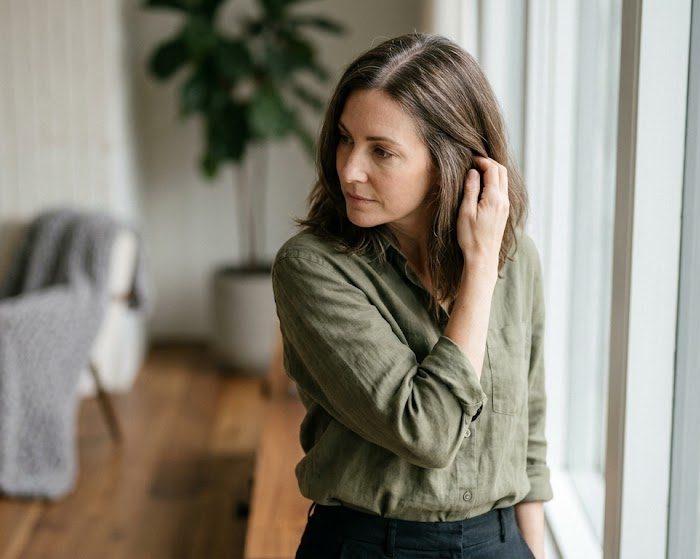
I see female hair loss as more than a cosmetic change because women are often measured by their hair and may connect it with femininity, identity, youth, and social presentation. When thinning makes the scalp visible, female density SMP can reduce scalp contrast and create the appearance of greater depth without changing the haircut.
You’re not just asking why your hair looks thinner. You’re asking why it seems to change how you feel about yourself. The cultural impact of female hair loss runs deep, because women are still measured by their hair in ways men rarely are. This article explains why women carry it differently, and what can genuinely restore confidence and daily ease.
Why female hair loss can feel so personal
The cultural impact of female hair loss is powerful because a woman’s hair is still treated as a visible signal of youth, health, attractiveness and even competence. That is why thinning can land as more than a cosmetic change, even when it is medically mild.
Women’s hair identity within society remains tightly bound to appearance. Thick, healthy hair is sold as part of beauty, fertility and control. From school age onwards, women absorb the message that hair is part of being put together, feminine and well.
That pressure shows up in ordinary moments. A wider parting under bright light, more scalp showing in photos, or avoiding windy weather can trigger far more distress than outsiders expect. The reaction is not vanity. It is a response to a social standard that has been rehearsed for years.
There is also a strange double standard around hair loss femininity and perception. If a woman says thinning hair is upsetting, she can be told she is being superficial. If she says nothing, she may still feel watched, judged or older than she is. That is one reason female hair loss often feels emotionally loaded in a way that surprises even close partners and friends.
Common causes matter, but they do not explain the full weight of the experience. Hormonal shifts, stress, thyroid changes, iron deficiency, genetics, menopause, postpartum shedding and traction from tight styles can all play a part. What turns thinning into a confidence issue is the meaning attached to it.
Why women often experience hair loss differently from men
Female pattern thinning usually behaves differently from the hairline changes most people picture. Many women keep their frontal hairline but lose density across the parting, crown or top section. That can make the scalp more visible without creating one clear bald patch.
This matters because diffuse thinning is hard to hide and hard to explain. A woman may still have plenty of hair length, yet feel that every mirror, fitting room light and phone camera exposes the scalp. That in-between stage can be particularly draining, because other people may not recognise it as hair loss while the woman living with it sees it every day.
Society also tends to reward hair effort in women. Good hair is often framed as something a woman should maintain through styling, colour, extensions or products. So when hair thins, many women blame themselves first. They wonder if they caused it, missed it, or failed to manage it properly.
Hair loss can also affect intimacy and social ease. Some women stop swimming, avoid overhead lighting, change their parting permanently or become anxious about anyone touching their hair. Those behaviour shifts are common, and they show why the issue is not purely visual.
The emotional effect is often strongest when hair loss clashes with a woman’s sense of self. If your hair has always been part of how you present yourself, style yourself or feel recognisable, thinning can feel like a disruption to identity. That is the deeper layer behind the cultural impact of female hair loss.
What actually helps when confidence drops
The most useful response starts with separating cause, treatment and camouflage. If shedding is active or sudden, medical assessment matters first. If the issue is stable thinning, the next question is practical: what will make you feel comfortable being seen again.
Topical treatments, clinician-advised medication, blood tests, dietary support and lower-tension styling can all help in the right case. Hair fibres and volumising products can make a visible difference, but they tend to be temporary and weather dependent. Extensions may add fullness in some cases, yet they are not always suitable if density is already low.
For women with unshaved hair who mainly want the scalp to show less, female density SMP can be a strong option. SMP places carefully matched pigment between existing hairs to reduce the contrast between hair and scalp, so the hair looks visually fuller without changing the haircut.
This is not about pretending to grow new hair. It is about restoring the appearance of density where visible scalp contrast is the real problem. On dark blondes, brunettes and grey blending cases, that visual reduction in scalp contrast can change how the whole head of hair reads at normal conversation distance.
Done well, female density SMP suits women who part their hair, wear it up, or feel exposed under direct lighting. It can work alongside medical management and complement other cosmetic options such as toppers or strategic colour. The realistic expectation is clear: it creates the look of more depth and less visible scalp, not extra strand count.
Reclaiming confidence without minimising what you feel
Confidence usually returns when the problem is named accurately. If the distress comes from scalp visibility rather than hair length, you need a solution that addresses scalp visibility. That sounds obvious, but many women spend years buying strand-focused products for what is really a contrast problem.
The bigger shift is cultural as much as cosmetic. You do not need to minimise the experience to be sensible about it. The cultural impact of female hair loss is real because women are taught, repeatedly, that hair carries social meaning. Acknowledging that is not weakness. It is clarity.
Society’s standards around women’s hair identity may not loosen overnight, but personal confidence often improves once your options become concrete. A medical plan helps when loss is active. Styling changes help when coverage is the issue. Female density SMP helps when the eye keeps catching the scalp.
The perception of hair loss and femininity does not have to define the next decade. The useful question is not whether you should care. It is what kind of result would make daily life easier: less time hiding your parting, less dread of bright light, or simply feeling more like yourself in the mirror again.
If thinning hair has started to alter how you dress, style, socialise or see yourself, treat that as meaningful information. The most effective next step is the one that matches the exact problem you are living with, not the one that sounds most dramatic or most familiar.
Frequently Asked Questions
Why does female hair loss affect confidence so much?
Female hair loss often affects confidence because hair is strongly tied to femininity, identity and social presentation for women. When thinning makes the scalp more visible, many women feel less like themselves. The emotional reaction is not vanity; it is a response to cultural expectations that place real value on a woman’s hair.
Is the cultural impact of hair loss different for women?
Yes, the cultural impact of hair loss is often different for women because society links female hair with youth, attractiveness and being well groomed. Many women also experience diffuse thinning rather than one obvious patch, which can make the loss harder to explain while still affecting daily confidence very strongly.
What is female density SMP?
Female density SMP is a scalp micropigmentation technique for unshaved hair that places pigment between existing strands. The aim is to reduce the contrast between hair and scalp so thinning looks less obvious. It does not grow new hair, but it can create a visually fuller result where density appears reduced.
Can SMP help if I still have plenty of hair but my scalp shows?
Yes, SMP can help if you still have good hair length but dislike how much scalp shows through at the parting or crown. Female density SMP is designed for exactly this issue. It visually adds depth beneath the hair, which can make overall density look stronger under normal lighting conditions.
How do I know which hair loss solution makes sense for me?
The right hair loss solution depends on the actual problem. If shedding is sudden or active, medical assessment comes first. If your main concern is visible scalp rather than lack of length, cosmetic options such as female density SMP, toppers or styling changes may make more practical sense than strand-focused treatments alone.
What should I do if my hair loss is sudden before considering SMP?
If your shedding is sudden or still active, I recommend medical assessment before considering cosmetic camouflage. Hormonal shifts, stress, thyroid changes, iron deficiency, genetics, menopause, postpartum shedding and traction from tight styles can all play a part. Once the cause and activity are clearer, you can consider options that match the issue.
