
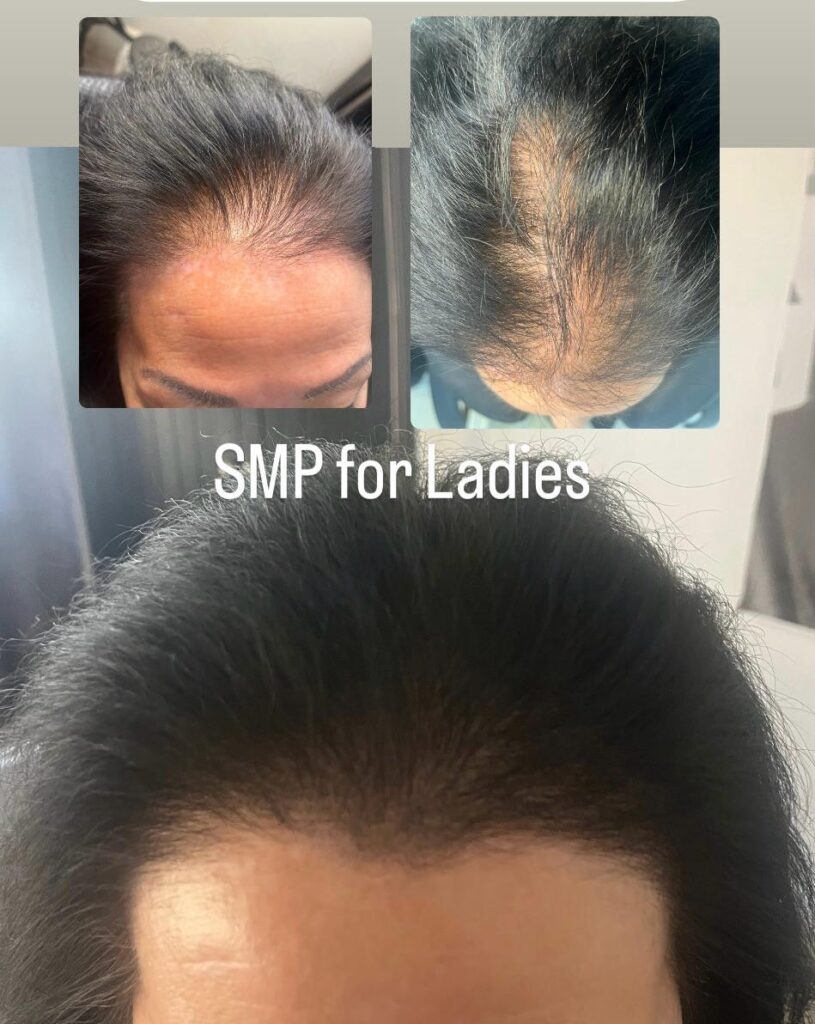
I see women’s hair loss as more than a cosmetic concern. In my experience, it can bring grief, embarrassment, anxiety, depression, and reduced quality of life. I use scalp micropigmentation to create the appearance of density through existing hair, along the hairline or part, with a subtle, natural-looking result that can help women recognize themselves again.
Let me be honest with you. In over four decades of working in beauty and micropigmentation, I’ve sat across from hundreds of women who’ve walked through my door carrying something much heavier than thinning hair. They’re carrying grief, embarrassment, and a quiet kind of suffering that the world rarely acknowledges. Women’s hair loss is not just a cosmetic issue. It is a deeply emotional experience, and I think it deserves a real, honest conversation.
Why Hair Loss Hits Women So Differently
Society has always tied a woman’s identity to her hair. From the time we’re little girls, thick, full hair is sold to us as a symbol of beauty, health, and femininity. So when it starts to go, whether gradually through female pattern hair loss, or more suddenly through conditions like alopecia areata, thyroid disorders, or postpartum shedding, the psychological impact can be devastating.
According to the American Hair Loss Association, approximately 40% of women experience noticeable hair loss by age 40. By age 50, that number climbs closer to 50%. And yet, the conversation around women’s hair loss remains frustratingly quiet compared to the attention men receive. That silence makes women feel more alone, more ashamed, and less likely to seek help.
The Emotional Weight Is Real and Validated by Research
This isn’t just anecdotal. A 2019 study published in the Journal of the American Academy of Dermatology found that women experiencing hair loss reported significantly higher levels of anxiety, depression, and reduced quality of life compared to those without hair loss. Another study from the International Society of Hair Restoration Surgery confirmed that hair loss has a greater psychological impact on women than on men.
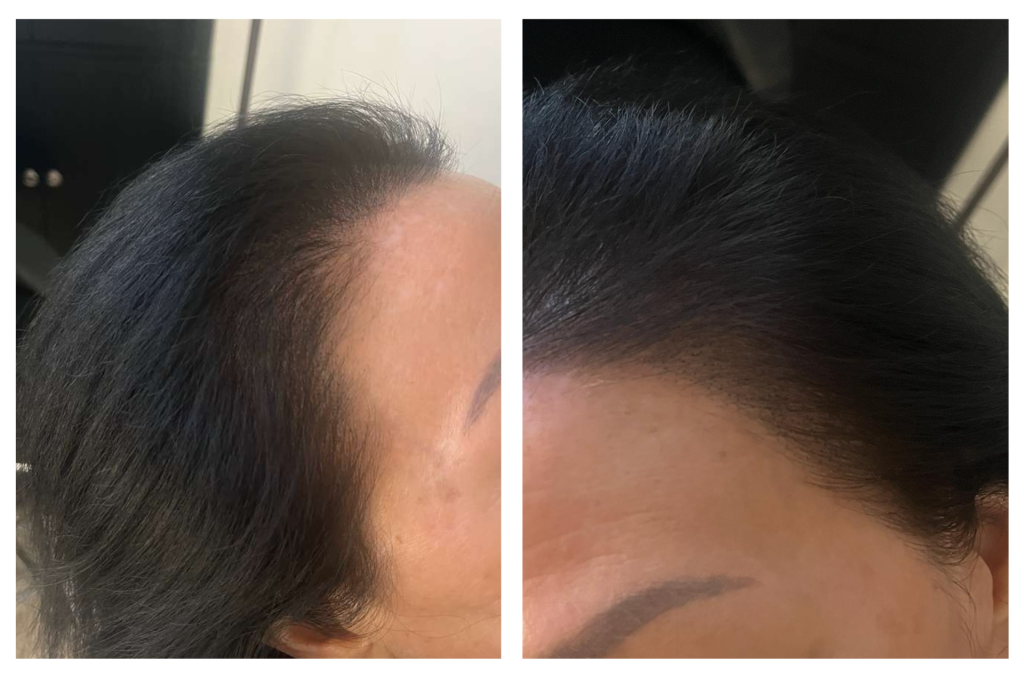 I’ve seen this firsthand in my studio. Women come in and within minutes they’re in tears. Not because of vanity, but because they’ve watched something they can’t control take away a part of how they recognize themselves in the mirror. That is a profound loss, and it deserves compassion, not minimizing.
Common Emotional Responses to Hair Loss in Women
- Loss of identity – Hair is deeply tied to how many women present themselves to the world. When it thins or disappears, many feel like they’ve lost a piece of who they are.
- Social withdrawal – Women with hair loss often avoid social situations, cancel plans, or stop participating in activities they once loved, all to avoid being seen or judged.
- Reduced self-confidence – Daily grooming rituals that once felt empowering become sources of anxiety. The bathroom mirror becomes a place of dread rather than self-care.
- Relationship strain – Many women feel embarrassed in intimate relationships or believe their partners see them differently. These feelings can damage connection and communication.
- Professional impact – Research shows that women with visible hair loss sometimes feel less authoritative or confident in workplace settings, affecting career performance and ambition.
The Types of Hair Loss Affecting Women Most Often
Understanding what’s causing your hair loss is an important first step, and there are several common culprits worth knowing about. Female androgenetic alopecia, also called female pattern hair loss, is the most prevalent. It typically presents as diffuse thinning across the top and crown of the scalp rather than a receding hairline, which is why it’s often missed or dismissed for years.
Other common causes include:
- Telogen effluvium – Often triggered by stress, illness, surgery, childbirth, or hormonal changes. Hair sheds more rapidly than it regrows.
- Alopecia areata – An autoimmune condition that causes patchy hair loss and can progress to full scalp or body hair loss in some cases.
- Traction alopecia – Caused by repeated tension from tight hairstyles like braids, weaves, or ponytails. This is especially common along the hairline.
- Thyroid disorders and hormonal imbalances – Conditions like hypothyroidism, PCOS, and menopause-related hormone shifts can all trigger significant hair thinning.
- Nutritional deficiencies – Low iron, vitamin D, and B12 levels are frequently linked to diffuse hair shedding in women.
Why Women Suffer in Silence
One of the most heartbreaking parts of what I witness is how long women wait before doing anything about their hair loss. Many spend years trying to hide it with clever styling, thickening sprays, and strategic parting before they ever seek professional help. They tell themselves it’s not “bad enough yet,” or that they should just “accept it.”
Part of this comes from the lack of visible representation. When we see hair loss discussed in mainstream media, it’s almost always framed through a male lens. Women feel like their experience is invisible, or worse, trivial. I want to say clearly: your feelings about your hair loss are completely valid. There is nothing shallow or superficial about grieving it.
The other barrier is simply not knowing there are real solutions available. Many women assume that once hair loss begins, nothing can be done. That isn’t true, and it’s a belief I work hard to change every day in my studio.
Scalp Micropigmentation as an Emotional Turning Point
I got certified in scalp micropigmentation because I saw a gap in what was being offered to women. Most hair loss solutions either don’t work consistently, require ongoing pharmaceutical commitment, or involve surgery. SMP is different. It’s a non-surgical, paramedical cosmetic hairline tattoo procedure that replicates the appearance of hair follicles on the scalp, creating the look of density, a fuller hairline, and a more complete appearance where thinning is visible.
For women, SMP is typically used differently than for men. Rather than creating a buzzed look, the technique is applied more subtly, adding the illusion of density through the existing hair and along the hairline or part. The result looks completely natural and doesn’t require daily maintenance or a commitment to styling around thinning patches.
What I’ve seen this do for women emotionally is nothing short of remarkable. The shift in energy from before an SMP session to after is palpable. Women walk out standing taller. They stop dreading the wind. They start making social plans again. They look in the mirror and recognize themselves.
My Approach at The Micropigment Studio
I’ve been in this industry since 1978, starting with my certification in makeup artistry from Elegance International Academy and building through decades of paramedical work, esthetics, permanent cosmetics, and eventually scalp micropigmentation. Everything I do is informed by that depth of experience and by a genuine passion for helping people feel like themselves again.
Every woman who comes to me for a hair loss consultation gets my full attention and an honest conversation. I don’t push a procedure on anyone. I want to understand your specific type of hair loss, your goals, your lifestyle, and what “feeling better” looks like for you. Then we build a plan together.
I’m currently based in Willow Glen, San Jose, and I’m very excited to share that a new hair loss solution is coming soon to Santa Clara, California. As I work through the process to establish a presence in Santa Clara, I want the women of that community to know that help, real help, is on its way. Stay tuned for updates.
What Women Can Do Right Now
If you’re experiencing hair loss and haven’t yet taken a step toward addressing it, here’s what I recommend:
- See your doctor first – Rule out thyroid issues, nutritional deficiencies, and hormonal imbalances before anything else. Blood work is a good starting point.
- Document the progression – Take photos of your part, crown, and hairline every few months. This helps you and any specialist understand the pattern and speed of hair loss.
- Talk about it – Whether that’s with a trusted friend, a therapist, or a community of women experiencing the same thing, breaking the silence reduces the shame.
- Explore non-surgical options – SMP, when performed by a skilled and certified SMP Artist, can dramatically improve how you feel about your appearance without surgery, downtime, or ongoing medication.
- Book a consultation – A conversation costs nothing and could change everything. I offer consultations specifically for women experiencing hair loss so we can assess what’s happening and what your realistic options look like.
You don’t have to keep hiding it. You don’t have to keep feeling alone in this. Hair loss is common, the emotional impact is real, and there are people, like me, who genuinely care about helping you find your confidence again.
Frequently Asked Questions
Q1: Does hair loss really affect women’s mental health?
Absolutely, and the research backs this up strongly. Studies published in peer-reviewed dermatology journals consistently show that women experiencing hair loss report significantly higher rates of anxiety, depression, and reduced quality of life compared to the general population. Unlike many physical changes, hair loss is visible to others and tied deeply to identity and self-image, which amplifies its psychological weight. In my experience working with women over many years, I’ve seen how profoundly thinning hair can erode a woman’s sense of self. The feelings are real, they are valid, and they deserve to be taken seriously by both medical professionals and the women experiencing them. Seeking help, whether emotional, medical, or cosmetic, is a courageous and completely reasonable response.
Q2: What causes hair loss in women?
Women’s hair loss has many potential causes, and identifying the right one matters a lot when it comes to finding the right solution. The most common cause is female androgenetic alopecia, also called female pattern hair loss, which is largely genetic and hormonal. Other frequent culprits include telogen effluvium, which is triggered by physical or emotional stress, childbirth, illness, or surgery. Thyroid dysfunction, iron deficiency anemia, low vitamin D, and PCOS are also commonly linked to hair thinning in women. Alopecia areata is an autoimmune condition that causes patchy loss and can be unpredictable in its progression. Traction alopecia from tight hairstyles is increasingly common as well. A thorough blood panel and consultation with a dermatologist or trichologist can help pinpoint the cause so that treatment is targeted and effective rather than guesswork.
Q3: Can scalp micropigmentation help women with hair loss?
Yes, and it works beautifully when it’s done correctly by a skilled, certified SMP Artist who understands how to approach women’s hair loss specifically. Unlike the treatment approach for men, which often simulates a closely shaved head, SMP for women is applied to add the appearance of density through existing hair, fill in thinning crown areas, and restore a more defined or fuller-looking hairline. The result is subtle, natural-looking, and incredibly effective at reducing the visibility of thinning. It’s a non-surgical procedure with no recovery time, no ongoing medication, and long-lasting results. For women who have tried other options without success or who simply want an immediate, reliable solution, SMP can be genuinely life-changing. I’ve seen the transformation in women’s confidence firsthand, and it never gets old.
Q4: How is SMP for women different from SMP for men?
The core technique is the same, placing pigment into the upper dermal layer of the scalp to replicate the look of hair follicles, but the application strategy is quite different. For men, SMP often creates the illusion of a full, shaved head of hair or restores a receded hairline. For women, the goal is almost never to mimic a shaved head look. Instead, the SMP Artist works with the existing hair to add density and fullness through the scalp, particularly in areas like the part line, crown, or temples where thinning is most visible. Hairline work for women tends to be softer and more diffuse rather than sharply defined. The pigment choices, needle configurations, and layering techniques are all adapted to complement longer hair and a natural female hair growth pattern. A thorough consultation before any session is essential to map out the right approach for each individual client.
Q5: Is hair loss treatment available near Santa Clara, California?
Great news for women in the South Bay Area. I am currently in the process of bringing The Micropigment Studio to Santa Clara, California, and I couldn’t be more excited about it. Santa Clara is a vibrant, growing community, and I know there are women there who are dealing with hair loss quietly and deserve access to real, personalized solutions. While I finalize permitting and get everything in place, I am still fully available at my current location in Willow Glen, San Jose, which is just a short drive away. Women from Santa Clara and the surrounding Silicon Valley area are warmly welcome to book a consultation now. You don’t need to wait. Reach out, let’s talk, and let’s figure out together what the right path forward looks like for you.
Q6: Will my hair loss get worse over time if I don’t treat it?
It depends entirely on the underlying cause. Female pattern hair loss, which is the most common type, is progressive in nature, meaning it tends to worsen slowly over time without some form of intervention. Other types of hair loss, such as telogen effluvium triggered by stress or illness, are often temporary and may resolve on their own once the underlying trigger is addressed. Alopecia areata can be unpredictable, with periods of shedding followed by regrowth. The important thing is not to ignore it and hope for the best. Early consultation with both a medical professional and a specialist like myself gives you the most options. The sooner you understand what’s happening, the sooner you can take meaningful action, whether that’s medical treatment, lifestyle changes, nutritional support, or a cosmetic solution like scalp micropigmentation.
