
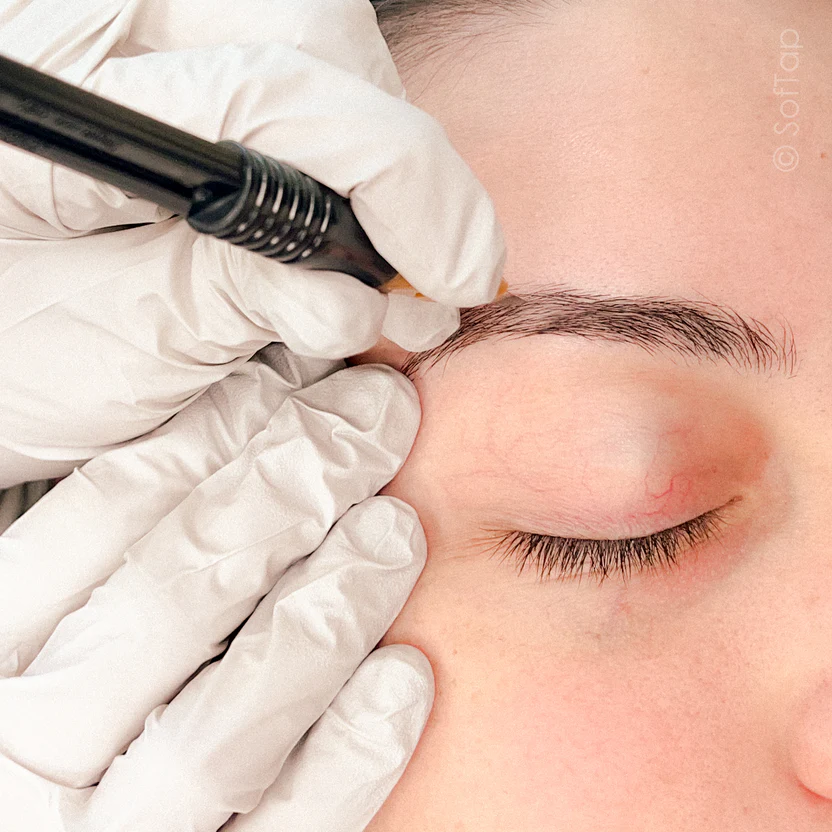
I recommend SofTap for moderately oily skin when you want a soft, natural, slightly fuller-looking brow. For very oily skin or maximum stroke definition and longevity, I usually recommend nano brows, which uses a digital machine and a single ultra-fine nano needle. I make the final recommendation after assessing your skin and desired look at consultation.
You want defined, natural-looking brows, and you’ve probably also heard that oily skin and microblading don’t always get along. It’s a fair concern, and the honest answer depends a lot on which microblading method you’re talking about. At my studio I offer SofTap manual hand-tapping and nano brows using a digital machine, and both are well suited to oily skin in different ways. Here’s the breakdown of why oily skin causes trouble with traditional bladed methods, why these two techniques perform better, and how I help you choose between them.
Why oily skin gives traditional bladed microblading trouble
Most of what’s written online about oily skin and microblading is based on the traditional bladed method. That technique uses a small handheld blade to make tiny incisions in the upper layers of skin, and pigment is then pressed into those cuts. The trouble is that oily skin produces more sebum, the natural oil secreted by your sebaceous glands, and that sebum moves constantly through the skin tissue.
When the skin is cut and then asked to heal around pigment, the sebum can push against those freshly deposited strokes. Within weeks, what looked crisp can soften, blur at the edges, or fade unevenly. This isn’t a failure of the practitioner. It’s biology working exactly as it should. The pigment depth that holds beautifully on dry or normal skin is simply more vulnerable to migration in oilier tissue when the skin has been bladed.
SofTap manual hand-tapping
SofTap is a hand-tapped technique that I’m specifically certified in through the SofTap Permanent Cosmetic Academy in Livermore, California. Rather than cutting fine lines into the skin with a blade, SofTap uses small, disposable hand tools to gently tap pigment into the upper dermis. There is no blade, no slicing, and no machine vibration.
For oily skin, SofTap brings clear advantages:
- The tapping motion deposits pigment in tiny controlled implantations rather than open channels, which means less trauma and less inflammation during healing.
- SofTap pigments are hypoallergenic and body-compatible, formulated specifically for permanent cosmetics rather than being repurposed tattoo inks.
- The healed look is naturally softer and slightly denser, which camouflages any minor pigment shift better than crisp hairlines do.
- Less wound trauma means oily skin recovers more cleanly, which matters if your skin is reactive or breakout-prone.
SofTap is my usual recommendation for clients with moderately oily skin who want a soft, natural, slightly fuller-looking brow.
Nano brows with the digital machine
Nano brows uses a digital permanent makeup machine fitted with a single ultra-fine nano needle to deposit pigment in precise hair-like strokes. I’m certified in this method through Evon Academy in Huntington Beach, and it’s a strong option specifically for clients whose skin is significantly oilier or who want crisp, defined hairstrokes that last as long as possible.
For oily skin, nano brows brings real strengths:
- The digital machine controls needle depth and frequency with high precision, so each stroke is placed exactly where it needs to be without over-traumatizing the skin.
- The single-needle approach creates less skin disruption than a blade and tends to retain pigment better against sebum movement.
- Hair strokes stay crisp longer because the pigment is implanted in a controlled, even way that resists blurring.
- Retention on very oily skin is often longer with nano brows than with any manual method, including SofTap.
Nano brows is my usual recommendation for clients with very oily skin or those who want maximum stroke definition and longevity.
How I help you choose between SofTap and nano brows
This is a consultation decision, not a one-size-fits-all answer. At your consultation I assess your skin, talk through the look you want, and consider how your skin has reacted to previous procedures. The decision usually falls into one of these patterns:
- If your skin is moderately oily and you want soft, natural-looking, slightly denser brows, SofTap is usually the better fit.
- If your skin is very oily and you want crisp, defined hairstrokes that retain as long as possible, nano brows is typically the stronger choice.
- If you have sensitive or reactive skin alongside oiliness, SofTap tends to heal more comfortably.
- If longevity is your top priority and you’ve had pigment fade quickly in past procedures, nano brows generally wins on retention.
I’ll give you my honest recommendation, but the choice is always yours after the consultation.
Realistic expectations for retention on oily skin
Both methods perform well on oily skin, but neither is bulletproof. Sebum activity always shortens retention compared to dry skin types. Here’s what to expect honestly:
- SofTap on moderately oily skin: typically one to two years between color refreshes.
- SofTap on significantly oily skin: closer to one year between refreshes.
- Nano brows on oily skin: typically one to two years, with very oily skin clients often retaining for around one and a half years.
A follow-up at six to eight weeks after your first session is standard for both methods and especially important for oily skin. That second appointment is where I assess what your skin has held, add density where pigment has lightened, and refine any strokes that need it.
Pre-session preparation for oily skin
What you do before your appointment matters as much as what happens in the chair. For at least two weeks before your SofTap or nano brows session, I ask oily-skin clients to:
- Stop using retinol, glycolic acid, or other strong chemical exfoliants near the brow area
- Avoid heavy oil-based moisturizers and serums across the forehead and brow zone
- Pause facials, peels, or any treatment that thins or stimulates the skin
- Arrive on the day of your appointment with clean, product-free skin around the brows
These steps give me the most stable canvas to work on, regardless of which method we use.
Aftercare that matters more on oily skin
Aftercare for oily skin is largely about managing sebum during the first two weeks. The principles apply to both SofTap and nano brows:
- Blot the brows gently with a clean tissue rather than wiping if oil builds up during healing
- Avoid moisturizers and serums anywhere near the brow area for the first ten to fourteen days
- Keep sweat off the brows by avoiding intense workouts and hot environments during the first week
- Sleep on your back if possible to avoid pillow contact with healing brows
- Resist the urge to pick at any flaking, which is normal and resolves quickly
Clients who follow aftercare to the letter consistently see better retention, no matter which method they chose.
My bottom line for oily-skin clients
Oily skin doesn’t disqualify you from beautiful, long-lasting brows. It just means the wrong technique can disappoint you faster. Between SofTap and nano brows, almost every oily-skin client has a good option available, and I’ll help you choose the one that fits your skin and your aesthetic.
If you’re in Santa Clara, or the surrounding South Bay, you can call or text the studio at 831-251-7229 to schedule a consultation.
Frequently Asked Questions
Can microblading really work on very oily skin?
Yes. Between SofTap and nano brows, almost every oily-skin client has a workable option, even those whose skin is significantly oilier than average. The two methods place pigment differently than traditional bladed microblading does, which makes them substantially more compatible with sebum-rich skin. While retention is generally shorter on oily skin than on dry skin regardless of method, most of my oily-skin clients are happy with their results and only need a refresh every one to two years. The technique choice is made at consultation based on your specific skin and the look you want.
Should I choose SofTap or nano brows if I have very oily skin?
For very oily skin specifically, nano brows usually has the edge on retention and stroke crispness. The digital machine places each stroke with precise depth control, and the single nano needle approach tends to resist sebum movement better than manual methods. SofTap is still a good option for moderately oily skin, and it produces a softer, more natural-looking result, but if longevity and crisp definition are your priorities and your skin is significantly oily, nano brows is typically my recommendation. I’ll give you a clear answer at consultation after assessing your skin in person.
How long does microblading last on oily skin?
Retention on oily skin runs about one to two years for both SofTap and nano brows before a color refresh is needed, compared to two to three years on dry or normal skin. Very oily skin tends to be on the shorter end of that range. The difference comes down to how sebum interacts with pigment over time. Aftercare, sun exposure, and skincare habits influence longevity significantly. Clients who follow aftercare precisely and avoid oily products around the brows tend to retain pigment closer to the longer end of that range.
Will I need different aftercare for SofTap versus nano brows on oily skin?
The core aftercare principles are the same. Keep the area clean and dry, avoid oily skincare near the brows, manage sweat and sun exposure carefully, and don’t pick at any flaking. I’ll give you a detailed personalized plan based on which method we used and how your skin tends to heal, but most of the differences are minor. The biggest factor for oily skin is consistency. Following the plan precisely matters more than the specific method you chose for how well your final result holds long-term.
What pre-care helps oily skin retain pigment best?
Stop using retinol, glycolic acid, and salicylic acid near the brow area for at least two weeks before your session. Avoid oil-based moisturizers and heavy serums in the brow zone during the same window. Skip any facials, chemical peels, or skin-stimulating treatments for at least two weeks before your appointment. On the day of your session, arrive with clean skin and no product around the brows. These steps apply equally to SofTap and nano brows, and they give me a calm, stable, predictable canvas to work on.
