
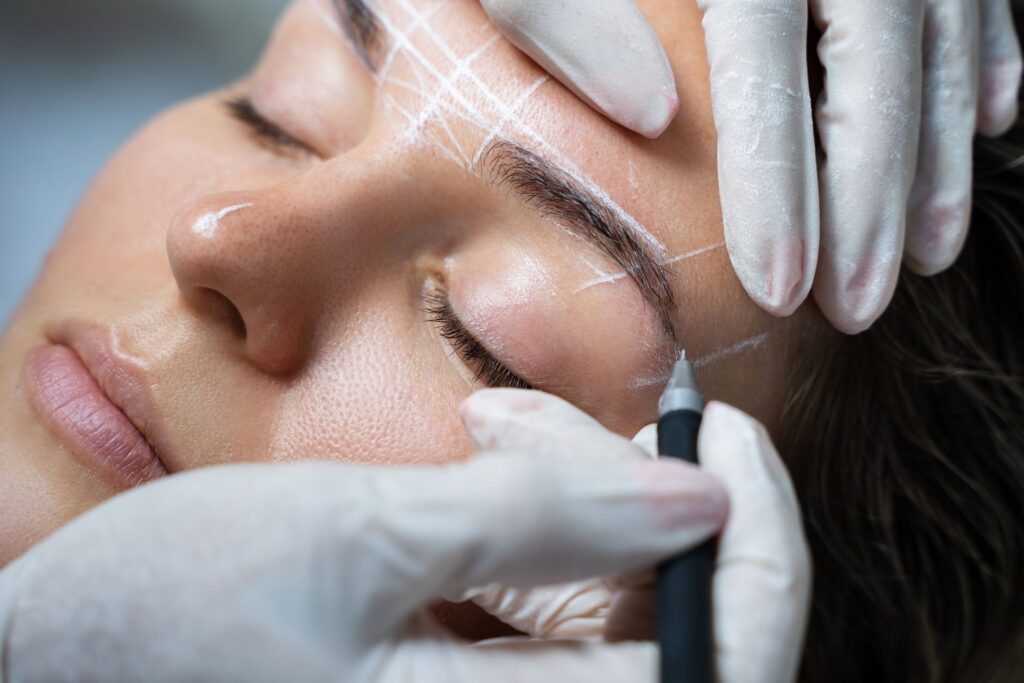
I recommend booking maintenance when your brows are noticeably fading, especially if you fill them with pencil or powder most days. I assess retained pigment, refine existing strokes, and add new ones where needed. Returning while pigment remains makes the appointment easier, faster, and less intensive on the skin.
Your brows looked perfect for a few months, and now the strokes are softening, fading, or losing their definition. You’re wondering whether that’s normal, whether you’ve done something wrong, or whether it’s simply time to book a maintenance appointment. This article answers all three questions. By the end, you’ll know exactly when to come back, what happens at the appointment, and what you should expect to pay at my studio.
Why microblading fades and why that is completely normal
At my studio I use two methods for brow microblading: SofTap manual hand-tapping and nano brows using a digital machine. Both deposit pigment into the upper layers of the skin in a way that mimics natural hair. Because the pigment sits shallower than a traditional tattoo, the skin naturally cycles it out over time. Fading is not a flaw. It’s how these techniques are designed to work.
Most clients see noticeable fading between twelve and twenty-four months after their procedure, depending on skin type, lifestyle, and aftercare. Oily skin tends to push pigment out faster, often causing strokes to soften within the first year. Drier skin types usually hold results longer. Sun exposure, swimming, and certain skincare ingredients such as retinol all accelerate the fade.
The initial healing process also plays a role. After your first session, the brows go through a flaking phase that can make strokes look patchy at the four-week mark. That’s why a follow-up appointment, scheduled six to eight weeks after the initial procedure, is considered part of the original treatment rather than an optional extra. The skin’s response to pigment varies, and that first refinement is where I adjust the shape, fill any gaps, and make sure both brows are reading evenly.
What actually happens at a follow up appointment
A follow up appointment is shorter than your first session, typically 60 to 90 minutes compared to two to three hours for the initial procedure. The mapping and design work is already done, so the focus is on assessing what has retained well and what needs attention.
At the appointment, I examine how the pigment has healed across each brow, note any areas where strokes have faded or blurred, and discuss whether a slight adjustment to color or shape would serve you better now than it did at your last session. Skin changes over time, and sometimes a small shift in tone or arch position makes the result look fresher and more current.
The technique itself follows the original stroke pattern, reinforcing existing lines and adding new ones where needed. With SofTap, that means tapping pigment back into softened or lightened areas using the same disposable hand tools used in your first session. With nano brows, the digital machine reinforces existing strokes using the same single nano needle approach. Healing follows the same timeline either way: expect some redness and light flaking in the first week, with the final result settling after four weeks.
A follow up is not the same as a color correction. If you’ve previously had microblading elsewhere and are dealing with strokes that have healed gray, blurred into a solid shape, or migrated, that requires a separate assessment. Color correction work takes more time and may involve additional steps before standard maintenance can resume.
How often to schedule microblading maintenance
After your initial session and six to eight week follow-up, most clients return for maintenance once every twelve to twenty-four months. That cadence keeps strokes defined, color accurate, and the overall brow looking intentional rather than faded.
You don’t need to wait until the brows have completely disappeared. Coming back while some pigment is still present makes the appointment easier, faster, and less intensive on the skin. A useful rule of thumb: if you’re filling in your brows with a pencil or powder most days, it’s time to book. If you’re still happy with the shape and depth and only occasionally adding a little product, you can wait a few more months.
Skin type influences your personal schedule significantly. Clients with drier skin often comfortably stretch to two years or beyond. Those with oilier skin tend to do better on a twelve to eighteen month cycle. Nano brows clients with very oily skin can sometimes push retention slightly longer than SofTap clients because the digital deposit holds more crisply, although both options serve oily skin well. After a few rounds of maintenance, you’ll have a clear sense of how your skin holds pigment and can plan accordingly.
Pricing for follow up appointments
Follow up pricing is lower than the original procedure, reflecting the shorter appointment and reduced design work involved. At my studio, expect to pay roughly 40 to 60 percent of your initial fee for an annual or biennial refresh, depending on how much work the skin requires.
The six to eight week follow-up after your first session is included in your original treatment price. There’s no separate fee for that appointment, and it’s a non-negotiable part of how SofTap and nano brows are properly delivered.
If you leave longer gaps between appointments, two years or more, you may find the follow up fee moves closer to a full procedure price. At that point there is often very little retained pigment to work with, which means more strokes to place and a longer appointment. Consistent maintenance keeps each visit efficient and the cumulative cost manageable over time.
If you’re in Santa Clara or the surrounding area, you can call or text the studio at 831-251-7229 to book your maintenance appointment.
Frequently Asked Questions
How long after my first session do I need a follow up?
You should book your first follow up four to six weeks after your initial SofTap or nano brows session. This follow-up is considered part of the original treatment, not an optional extra. It lets me fill in any gaps, refine the shape, and correct any unevenness that appeared during healing. It’s an essential part of how both methods are designed to be delivered.
How often does microblading need maintenance after the first year?
Most clients return for maintenance every twelve to twenty-four months to keep strokes defined and color accurate. Oily skin types typically benefit from returning closer to the twelve to eighteen month mark, while drier skin can often stretch to two years or slightly beyond before noticeable fading affects the result. Your specific schedule depends on your skin and lifestyle.
Will a follow up appointment hurt more than the original session?
Most clients find a follow up more comfortable than the initial session. The skin is already familiar with the process, numbing cream is applied as standard, and the appointment is shorter. There may be slight redness and light flaking in the days that follow, which is normal and resolves within one to two weeks. Most clients describe the sensation as very manageable.
Can I have a refresh if my brows have gone gray or blurry?
Brows that have faded to a gray tone or where strokes have blurred together require color correction before standard maintenance can resume. This is a separate process and takes longer to assess and treat. Book a consultation first so I can evaluate the existing pigment in person and recommend the right approach for your skin and previous work.
Does microblading maintenance cost the same as the original procedure?
No. Follow up appointments are generally 40 to 60 percent of the original procedure cost, reflecting the shorter session time and reduced design work. The six to eight week follow-up after your first session is included in the initial treatment price. Leaving very long gaps between visits may push the fee closer to a full procedure rate due to the additional work required.
